Is Gingerbread Polish Or German?
The documented answer to whether gingerbread is Polish or German, from the first named Toruń baker in 1380 to the German Lebkuchen records, plus what both cities' museums show today.
Is gingerbread Polish or German? The documented answer is that the craft is older than either modern state, and both countries hold early written records of it. Poland's Ministry of Agriculture, in its entry for "Pierniki z Torunia" on the List of Traditional Products, states that by the oldest surviving sources, the Teutonic Order books, the history of Toruń gingerbread goes back to the middle of the 14th century, and that the first gingerbread baker named in the city is Niklos Czan, in 1380. On the German side, Lebkuchen is credited to monks in Franconia, with Lebkuchen bakers recorded in Ulm in 1296 and in Nuremberg in 1395.
Both dates matter because of what Toruń was in 1380. It was a town of the Teutonic Order, which founded it in 1233. It came under the Polish Crown in 1466, under Prussia in 1793 and back to Poland in 1920. A baker working there in 1380 baked for a Teutonic Order town, not for a Polish or a German nation-state, because neither existed in its modern form. The craft predates the borders people now argue about, which is why a short guide to Toruń gingerbread starts with the documents rather than with the flags.
Where The Word Piernik Comes From, And What It Meant
The Polish word for gingerbread, piernik, comes from the Old Polish word "pierny", meaning peppery, and the District Museum in Torun states that the history of Torun gingerbread reaches back to the 14th century. The name itself records the recipe: medieval spice bread owed its character to pepper and other spices, and the word survives in Polish long after the spice mix changed.
That etymology is the strongest purely Polish claim in the whole discussion. Whatever the craft's roots, the word piernik is Polish, it describes a spiced bread, and it was attached to a specific city's product by the late 1300s. The Ministry of Agriculture entry calls gingerbread a valuable part of Toruń's cultural heritage, with nearly 700 years of history, St Catherine fairs and gingerbread festivals.
The spices themselves travelled before either name existed. Spices reached Toruń through north German trading companies and by sea through the port of Gdansk. So the ingredient chain that made piernik possible ran through German-speaking merchants and a Baltic port, and the finished craft took a Polish name in a Teutonic Order town. That is the honest shape of the answer: intertwined from the beginning.
Is Gingerbread Polish Or German?
Neither country owns gingerbread outright, and the written record gives each an early, independent claim: German sources put Lebkuchen with Franconian monks and named bakers in Ulm in 1296 and Nuremberg in 1395, while Torun's own record, in the Teutonic Order books, runs to the middle of the 14th century with the baker Niklos Czan named in 1380. What is specifically Polish is the word piernik, the unbroken Torun tradition behind it, and nearly 700 years of continuous baking in one city.
Set side by side, the two paper trails are close enough that no honest reading declares a winner by date alone. The German records are earlier, but they are records of a craft, not of the Polish word or of the Toruń tradition. The Polish record is a city's unbroken, documented production with a named baker, which is a different and in some ways stronger kind of claim.
Toruń and Nuremberg, both known for gingerbread, guarded their recipes from each other. That rivalry is itself evidence of how close the two traditions ran: two cities, trading in the same spices through the same networks, treating the same product as a treasure worth protecting. "Nurnberger Lebkuchen" has been an EU-protected geographical name since 1996 and must be made within the city of Nuremberg, a modern legal echo of that old guarding of recipes.
For a sense of the city whose name carries the Polish side of the argument, the Living Museum of Gingerbread and the district museum branch together carry the story, and a wider look at what Toruń is famous for shows how much of it the gingerbread occupies.
What The Two Toruń Gingerbread Museums Show Today
Toruń answers the Polish-or-German question with two museums you can walk into: the privately run Living Museum of Gingerbread at ul. Rabianska 9, where an adult ticket costs 42 zl and a show lasts about 75 minutes, and the Museum of Toruń Gingerbread at ul. Strumykowa 4, a district museum branch in the former Weese gingerbread factory, where an adult exhibition ticket costs 33 zl.
The museum in the old factory is the more direct answer to the question, because the building itself carries the German chapter of the story. The largest Toruń factory belonged to Gustav Weese, in a tradition dated from 1763, when Johann Weese began baking gingerbread. Gustav Traugott Weese inherited a small workshop from his father Andreas in 1824 and turned it into a large company. Gingerbread factories kept working between the wars; the largest, Gustav Weese's, was taken over in 1939 by the consumer co-operative union Spolem. The rest of the planning pages sit on Toruń Travel Guide.
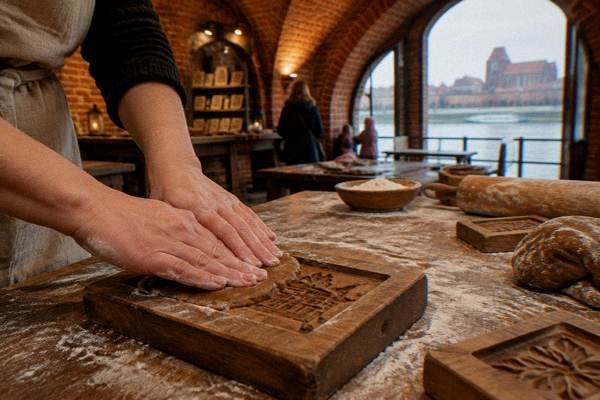
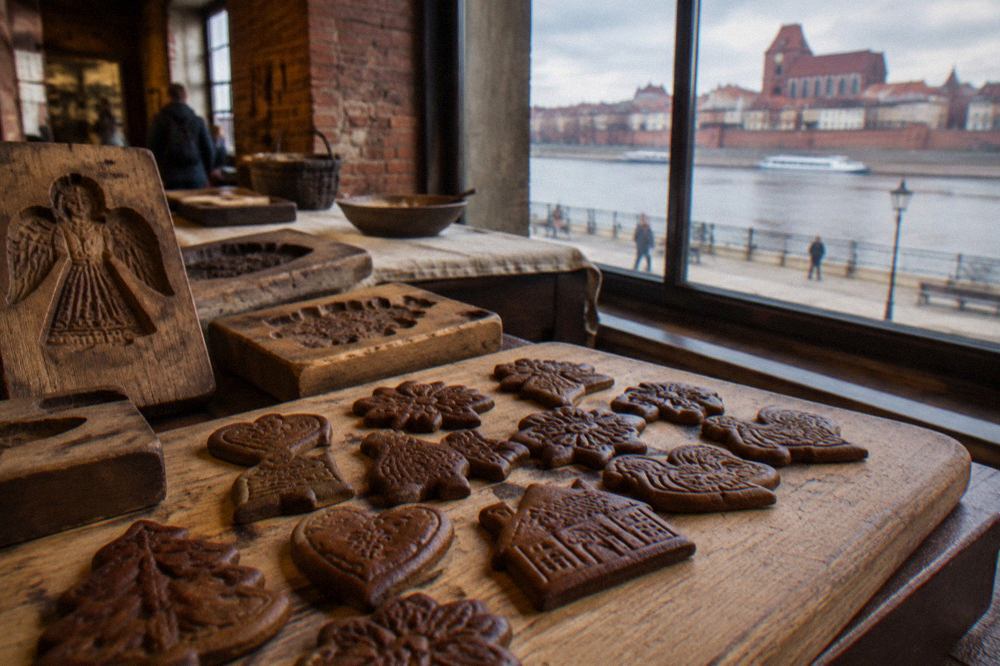
So a Toruń gingerbread dynasty with a German name, built in a city that was under Prussia from 1793, ended in a Polish co-operative takeover in 1939, and its factory now houses a Polish state district museum telling a nearly 700-year story. The factory museum shows wooden gingerbread moulds spanning the 1600s to the 1900s and baking technology from the 14th to the 21st century. The page's question dissolves inside that one building. A visit needs no side-taking, only a ticket.
| Museum | Address | Adult ticket | Hours |
|---|---|---|---|
| Living Museum of Gingerbread (Zywe Muzeum Piernika) | ul. Rabianska 9 | 42 zl (children, students, seniors 65+ 37 zl; disabled adults 35 zl) | Monday to Sunday 10:00-18:00, shows on the full hour, English show at 14:00 |
| Museum of Toruń Gingerbread (Muzeum Torunskiego Piernika) | ul. Strumykowa 4 | Exhibition 33 zl (reduced 28 zl); exhibition plus baking workshop 52 zl (reduced 46 zl) | Tuesday to Sunday 10:00-18:00 May to September, 10:00-16:00 October to April, closed Monday |
At the Living Museum the ticket office opens 15 minutes before each show and the English, bilingual show runs at 14:00, so the practical plan for an English-speaking visitor is built around that hour. The museum sits inside the medieval Old Town, a short addition to any walking day.
For visitors who want the question settled with dough rather than dates, the Private Gingerbread Museum Walk pairs the Old Town with the gingerbread story in one private outing, and the operator's live listing carries current times and terms: Check availability
Toruń, Nuremberg And The Guarded Recipes
The strongest national-flavoured claim on either side is legal rather than culinary: "Nurnberger Lebkuchen" has been an EU-protected geographical name since 1996 and must be made within the city of Nuremberg, while "Pierniki z Torunia" sits on Poland's Ministry of Agriculture List of Traditional Products, with the Teutonic Order books as its oldest surviving source and Niklos Czan as the first named baker in 1380.
Both protections do the same job in different registers. Nuremberg's is a geographical name locked by EU law; Toruń's is a traditional-product listing that fixes the product's documented lineage. Neither protection claims the invention of gingerbread, and neither needs to. Each city protects what its own bakers built on a craft that monks, merchants and spice traders had spread long before either list existed.
The spice trade explains why the two cities' products look so similar. Spices reached Toruń through north German trading companies and by sea through the port of Gdansk, the same channels that supplied south German baking. Two cities at the ends of overlapping trade networks, working with the same imported spices, produced two distinct named traditions and then guarded them from each other. That is rivalry, not descent.
The factory chapter adds the final twist. A German-named family firm, founded in a tradition dated from 1763, industrialised Toruń gingerbread under Prussian rule and passed into Polish hands in 1939 through the co-operative union Spolem, whose name still stands over Polish shops today. Its factory building is now a public museum of a craft the city treats as a valuable part of its cultural heritage.
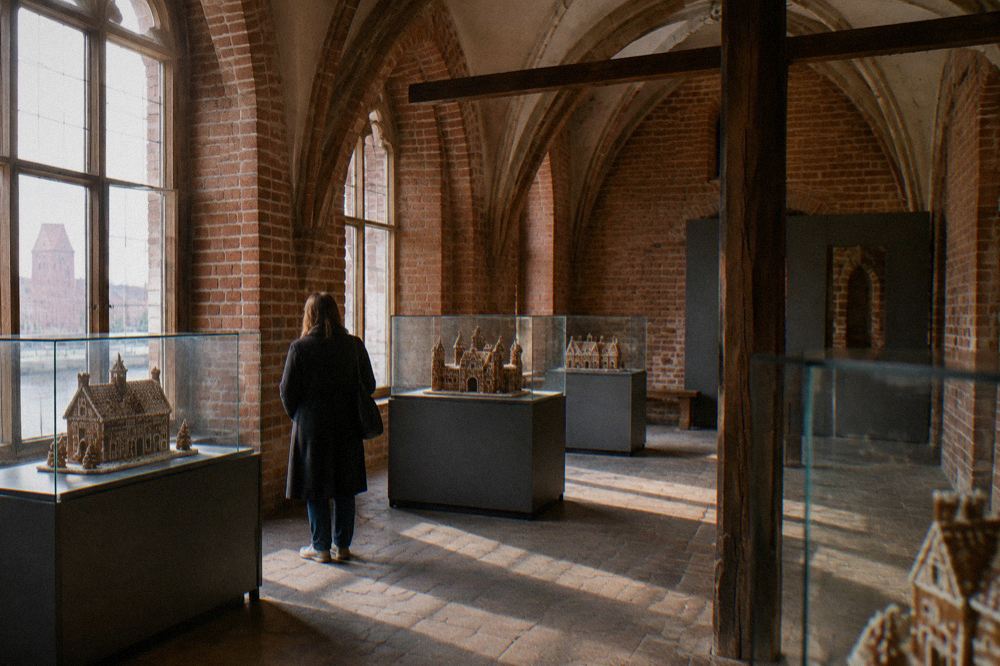
The practical conclusion for a visitor is simple. Eat the piernik in Toruń and the Lebkuchen in Nuremberg, and read each as its own city's document. In Toruń, the gingerbread museums are where the documents stop and the dough starts.
Common Questions About Gingerbread In Toruń
Is gingerbread Polish or German?
The craft is older than either modern state. Toruń's record, in the Teutonic Order books, runs to the middle of the 14th century, with the baker Niklos Czan named in 1380, while Lebkuchen bakers are recorded in Ulm in 1296 and Nuremberg in 1395. The word piernik and the unbroken Toruń tradition are the Polish side of the record.
What do Germans call gingerbread?
Germans call it Lebkuchen. The name is credited to monks in Franconia, and Lebkuchen bakers are recorded in Ulm in 1296 and in Nuremberg in 1395.
Who was the first named gingerbread baker in Toruń?
The first gingerbread baker named in the city is Niklos Czan, in 1380, according to Poland's Ministry of Agriculture entry for "Pierniki z Torunia" on the List of Traditional Products.
What does the word piernik mean?
The District Museum in Toruń states that the name comes from the Old Polish word "pierny", meaning peppery, a reference to the spices in the medieval recipe.
Where can you see Toruń's gingerbread history in person?
The Living Museum of Gingerbread at ul. Rabianska 9 runs interactive baking shows, and the Museum of Toruń Gingerbread at ul. Strumykowa 4 occupies the former Weese factory and displays wooden gingerbread moulds and baking technology from the 14th to the 21st century.
For travellers building a whole day around the question, the Private Polish Food Tour takes in the city's table alongside its sights, and for the streets that framed the whole story, the Medieval Town Walking Tour covers the ground the bakers knew.
Whether the dough first rose for monks in Franconia or for Niklos Czan on the Vistula, Toruń is where the Polish word, the surviving factory, the carved moulds and the 14th-century paperwork all sit within a walk of each other.