History Of Toruń
Toruń received its town charter on 28 December 1233, moved to its present riverside site in 1236, and grew into a brick merchant town whose walls, churches and castle ruins still stand. This page sets out the dated events the record carries and the places where each one can be seen.
Short answer
Toruń was chartered on 28 December 1233 under Kulm law, moved to its present site on the Vistula in 1236, and its Teutonic castle was pulled down by the townspeople in 1454. Nicolaus Copernicus was born in the town on 19 February 1473, and the Medieval Town of Toruń was inscribed on the UNESCO list in 1997.
Toruń's written history opens with a charter: on 28 December 1233 the town received its rights under Kulm law, and in 1236 the settlement moved to its present site on the Vistula, the position it has held ever since. The town that grew there became a place of brick walls, Gothic churches and a castle that no longer stands, and its medieval core was inscribed on the UNESCO World Heritage list in 1997 as the Medieval Town of Toruń, under criteria (ii) and (iv), covering three elements: the ruins of the Teutonic Castle, the Old Town and the New Town, ringed by defensive walls.
This page walks the town's history through the dates the record carries and the places where each date can be seen. For the practical side of a visit, the Toruń Travel Guide homepage gathers the transport, museum and itinerary pages in one place, and the self-guided walking tour page covers the UNESCO property street by street.
What Is The History Of The Town Of Toruń?
Toruń received its town charter on 28 December 1233 under Kulm law, moved to its present site on the Vistula in 1236, and its Teutonic castle was pulled down by the townspeople in 1454. Nicolaus Copernicus was born in the town on 19 February 1473, two treaties called the Peace of Thorn were signed there in 1411 and 1466, and the Medieval Town of Toruń entered the UNESCO list in 1997.
Each of those dates is attached to a place a visitor can stand in today. The castle's destruction in 1454 is the reason Toruń's castle survives only as ruins, unlike the intact castles elsewhere in the region such as the one described on the Malbork Castle day-trip page.
The town's later history is written in its fortifications. The Leaning Tower is a 14th century Gothic defensive tower in the town wall, leaning about 140 cm from vertical because the clay subsoil shifted, later used as a women's prison and a smithy. Fort IV is a 19th century Prussian fort of the Toruń Fortress ring. And at Barbarka, a forest settlement 9.0 km by road from Rynek Staromiejski, about 600 Poles were murdered by the Germans between October and December 1939, a site now marked as a national memorial.
Where Did The Teutonic Castle Go, And What Can You See Of It Now?
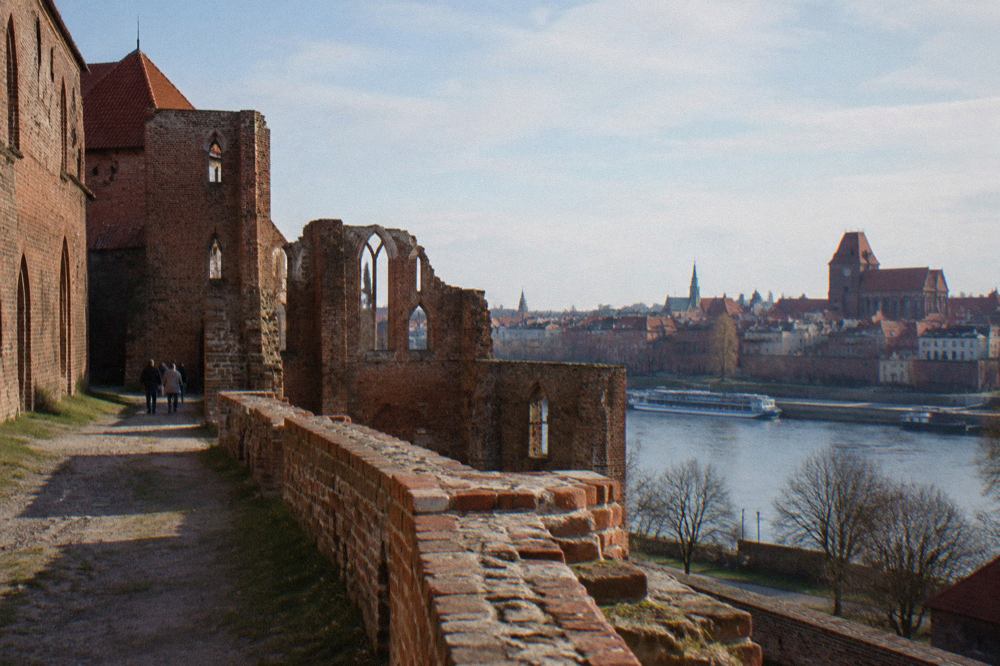
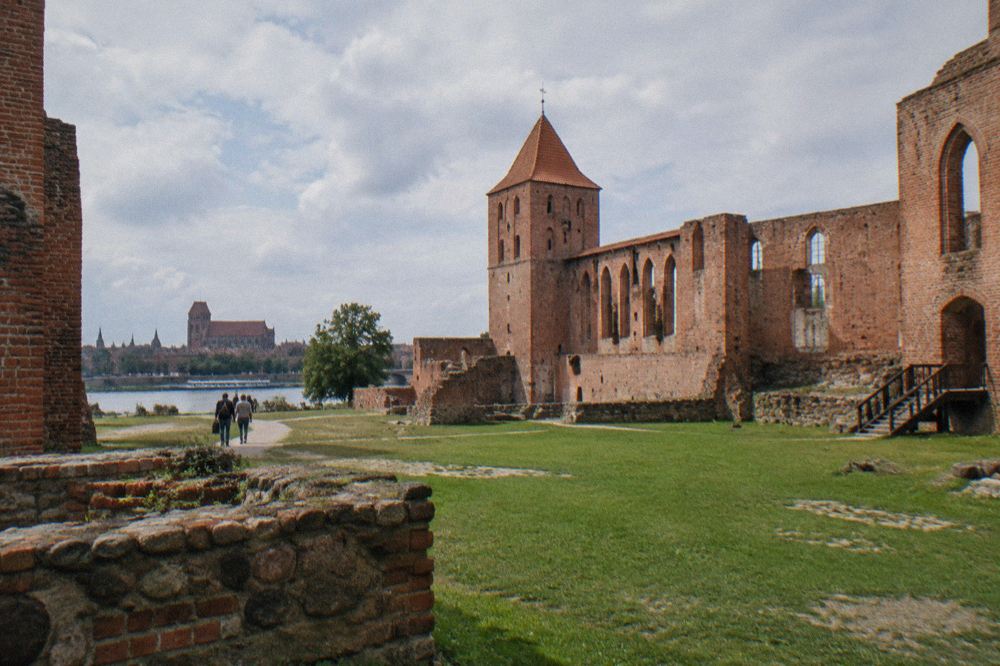
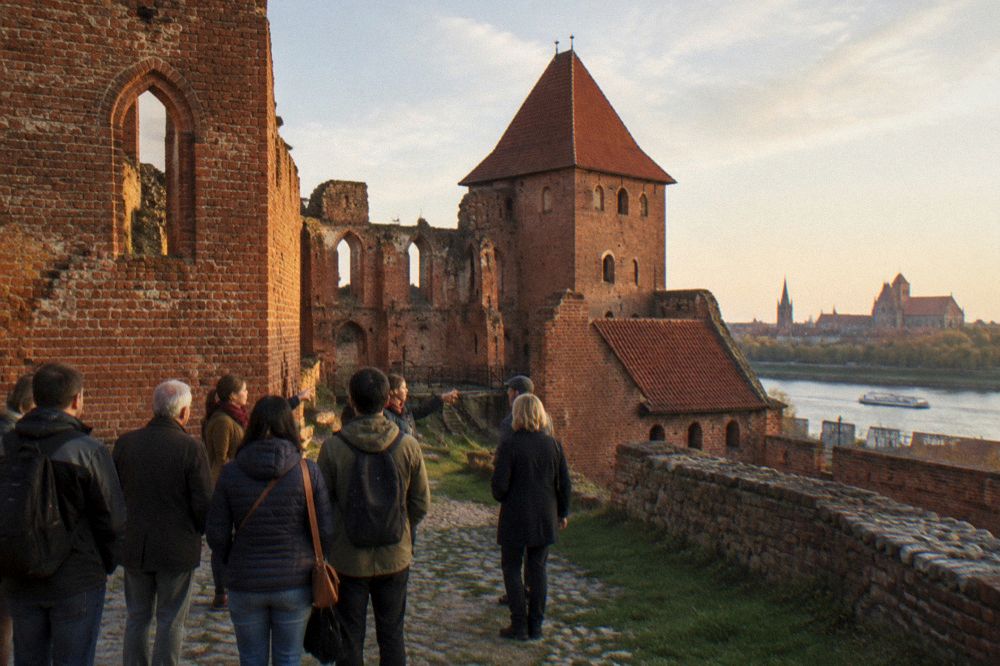
The Teutonic Order castle between the Old and New Town was pulled down by the townspeople in 1454, and what remains today are the ruins at ul. Przedzamcze 3, run by Torunska Agenda Kulturalna, open Monday to Sunday 10:00-18:00 with an adult ticket at 20 zl and a reduced ticket at 12 zl. The site stands 0.6 km, about 7 minutes on foot, from Rynek Staromiejski.
A visit is short and easy to combine with the rest of the Old Town. The 0.6 km walk from the main market square takes about 7 minutes, the site opens every day of the week from 10:00 to 18:00, and the Teutonic Castle ruins page carries the full practical detail. For travellers arriving on a day trip from the capital, the Warsaw to Toruń route page explains the rail options, with direct PKP Intercity trains taking about 2 hours to 2 hours 17 minutes from Warszawa Centralna to Toruń Główny.
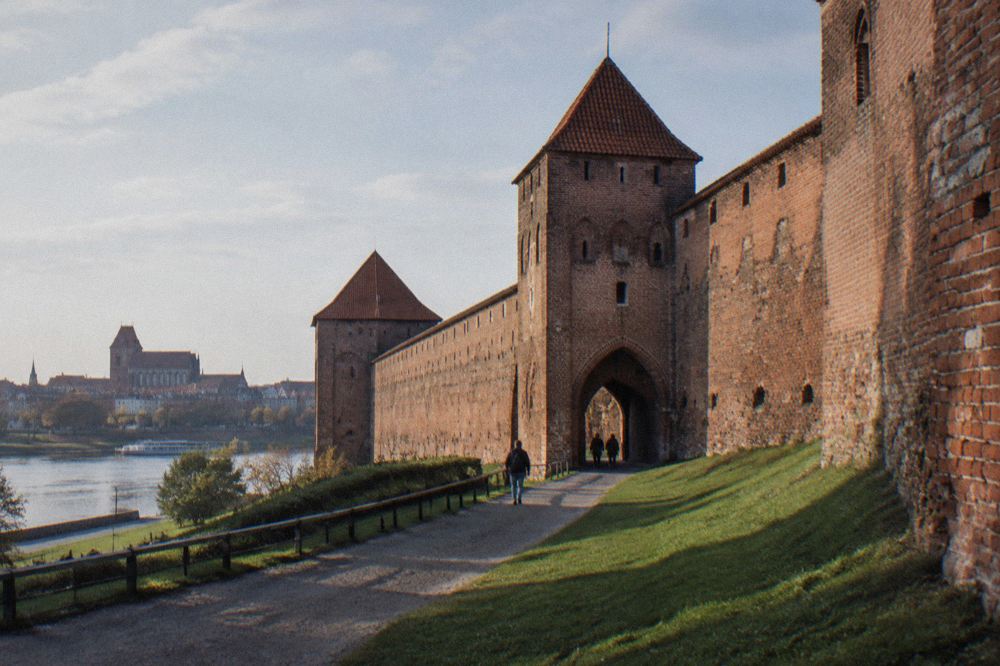
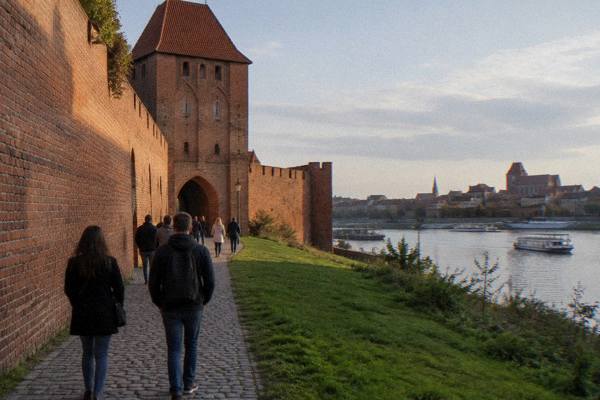
The castle ruins also anchor the northern end of a walk that takes in the surviving medieval walls. Three gates still stand on the Vistula side, Brama Mostowa, Brama Zeglarska and Brama Klasztorna, along with stretches of brick wall, and the oldest surviving fragment, 6 m high, stands at the end of ul. Pod Krzywa Wieza. All of it is free, open street space, and the city walls and gates page maps the full circuit.
How Does Copernicus Fit Into Toruń's Story?
Nicolaus Copernicus was born in Toruń on 19 February 1473 and died on 24 May 1543 in Frombork, and the Gothic townhouses at ul. Kopernika 15/17, the Dom Mikolaja Kopernika branch of Muzeum Okregowe w Toruniu, are traditionally linked to his family and presented as his reputed birthplace. The Copernicus monument on Rynek Staromiejski was unveiled on 25 October 1853, designed by Christian Friedrich Tieck.
The house museum on ul. Kopernika 15/17 carries the standard caveat the museum itself uses: the exact birth house is not proven, and the site is the reputed, traditionally held birthplace. He was born in Toruń, that much the record states plainly.
The monument adds a second dated layer. Unveiled on 25 October 1853 and designed by Christian Friedrich Tieck, it stands on Rynek Staromiejski, the same square the 1233 charter town grew around. The Copernicus House and Copernicus monument pages give each site its own treatment, and the question of where the astronomer was born is handled on the where was Copernicus born page.
For a guided walk of the medieval streets, the Medieval Town Walking Tour is the option to look at, and its live listing shows current availability: Check availability
What Do The Walls, Gates And Leaning Tower Say About Medieval Toruń?
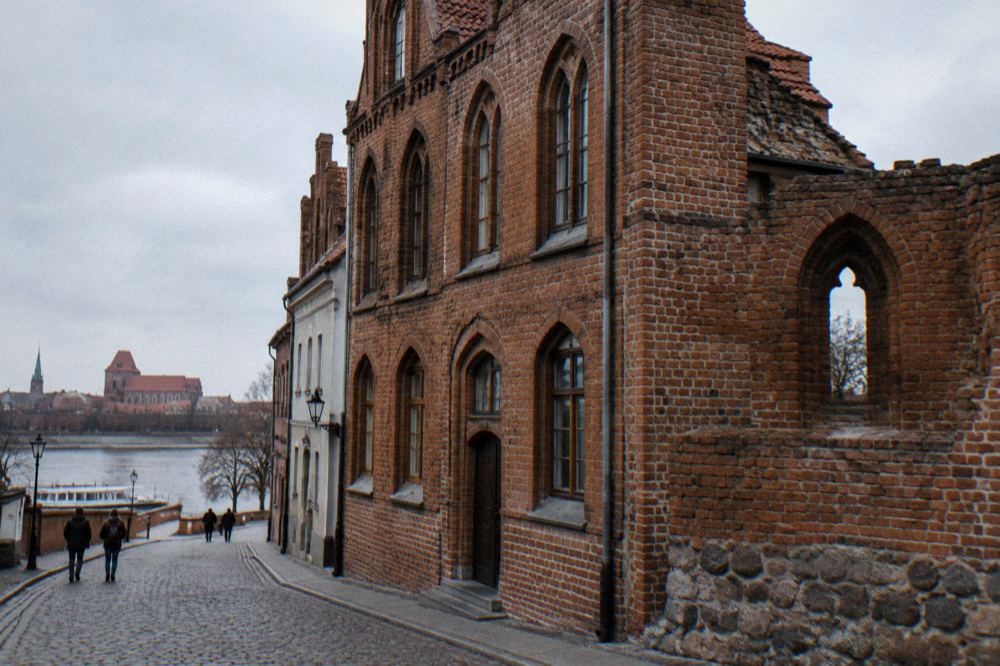
The Leaning Tower is a 14th century Gothic defensive tower in the town wall, leaning about 140 cm from vertical because the clay subsoil shifted, and it later served as a women's prison and a smithy. It is currently closed inside for conservation works, with no reopening date published, but the exterior on ul. Pod Krzywa Wieza is free to see at any time. Three medieval gates survive on the Vistula side, and the oldest wall fragment, 6 m high, stands at the end of ul. Pod Krzywa Wieza.
The tower's lean is geology, not design. The clay subsoil shifted under the 14th century structure and left it about 140 cm off vertical, and its afterlife as a women's prison and then a smithy shows how the town reused its defences once they stopped being defensive. The tower's adult ticket is 20 zl, reduced 10 zl, when it is open.
The gates and walls tell the same story in brick. The full route is on the city walls and gates page, and the Leaning Tower page carries the conservation status.
| Site | What the record dates | Status today |
|---|---|---|
| Teutonic Castle ruins | Pulled down by the townspeople in 1454 | Ruins at ul. Przedzamcze 3, open Monday to Sunday 10:00-18:00, 20 zl adult, 12 zl reduced |
| Leaning Tower | 14th century, leaning about 140 cm from vertical | Closed inside for conservation works, exterior free at any time |
| Brama Mostowa, Brama Zeglarska, Brama Klasztorna | Three surviving gates on the Vistula side | Free, open street space |
| Oldest wall fragment | 6 m high, at the end of ul. Pod Krzywa Wieza | Free, open street space |
| Copernicus monument | Unveiled 25 October 1853, designed by Christian Friedrich Tieck | On Rynek Staromiejski |
Where Does Toruń's Later Military History Show?
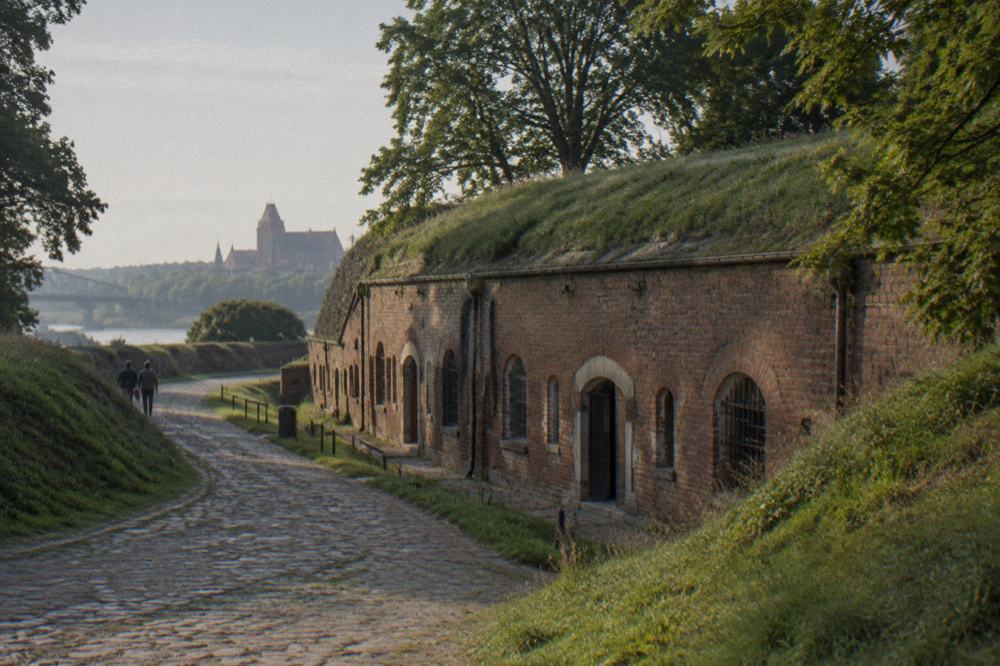
Fort IV is a 19th century Prussian fort of the Toruń Fortress ring, 5.4 km by road from Rynek Staromiejski, now also a hostel and event venue, with self-guided visits possible seven days a week in daylight until about an hour before dusk and no booking needed. A guided tour runs every Friday and Saturday at 20:00, with extra July and August slots, at 20 zl per person for about 1 hour.
The self-guided option makes it an easy add-on to any day: no booking, daylight hours, and the guided Friday and Saturday 20:00 tour adds the underground route for those who want it. The Toruń Fortress and Fort IV page carries the full detail.
Barbarka is the site of a different and darker dated event. At the forest settlement, 9.0 km by road from Rynek Staromiejski and reachable on MZK bus line 31 all week, about 600 Poles were murdered by the Germans between October and December 1939. The settlement now holds the Szkola Lesna education centre, a rope park and the national memorial, and the forest and memorial are free to enter.
| Site | Distance from Rynek Staromiejski | Entry | Getting there |
|---|---|---|---|
| Fort IV | 5.4 km by road | Self-guided free in daylight, no booking; guided tour 20 zl per person, Friday and Saturday 20:00 | Road |
| Barbarka | 9.0 km by road | Free, forest and memorial | MZK bus line 31, runs all week |
| Teutonic Castle ruins | 0.6 km, about 7 minutes on foot | 20 zl adult, 12 zl reduced | On foot from the Old Town |
How Old Is Toruń's Gingerbread Trade?
Toruń's gingerbread has a first documented mention in 1380, and the Kopernik factory traces its origin to 1763, making the town's baked trade older than every standing monument in the Old Town except the walls and churches themselves. The trade's two dates, 1380 and 1763, sit either side of the castle's destruction in 1454 and the Peace of Thorn treaties of 1411 and 1466.
The 1380 mention places gingerbread in the town during its medieval peak, and the 1763 factory origin carries the trade through to the commercial era that still shapes the town's shops. The Toruń gingerbread page covers the trade, the where to buy gingerbread in Toruń page covers the shops, and the Toruń gingerbread museums page covers the two museum experiences, including the Living Museum of Gingerbread, whose show and pricing are described on its own page.
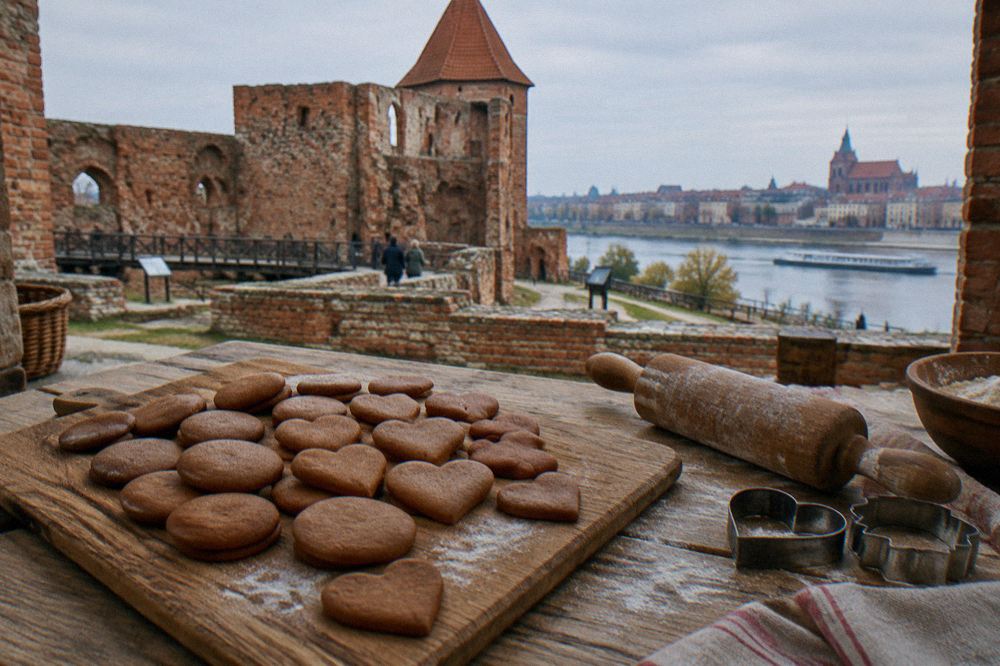
Gingerbread is also the town's clearest living link to the charter era. The trade that a document first names in 1380 is still sold on the streets laid out after 1236, and a visitor can walk from a gingerbread shop to the wall fragment at the end of ul. Pod Krzywa Wieza in a few minutes.
How Does The UNESCO Inscription Tie The Story Together?
The Medieval Town of Toruń was inscribed on the UNESCO World Heritage list in 1997 under criteria (ii) and (iv), covering three elements: the ruins of the Teutonic Castle, the Old Town and the New Town, ringed by defensive walls. The inscription recognises the town chartered on 28 December 1233 and moved to its present site in 1236, and its population on 31 December 2025 was 192,784.
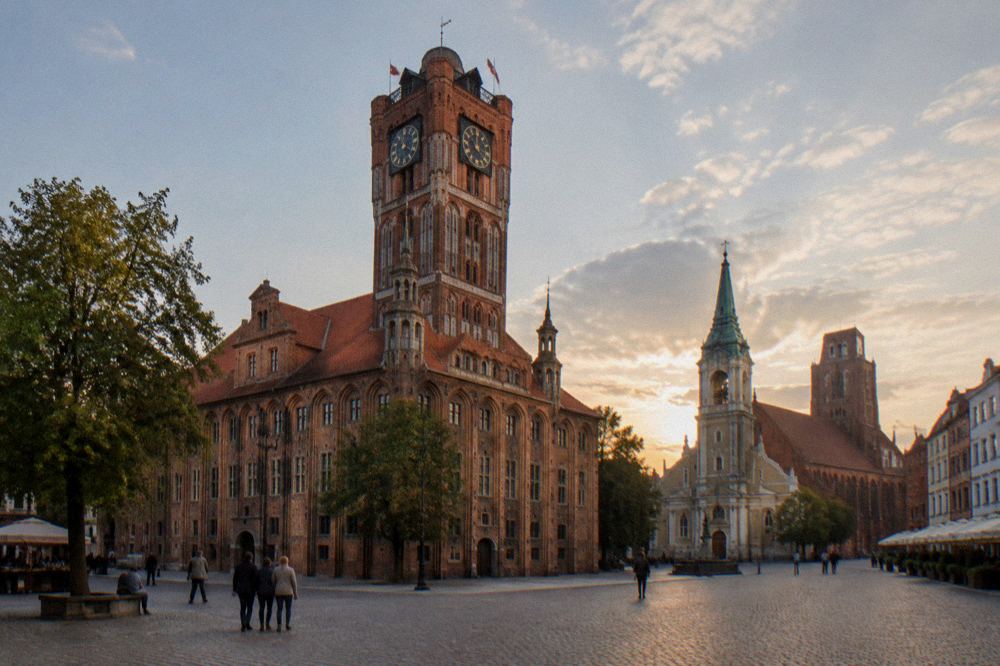
The three elements of the inscription map exactly onto the dates on this page. The castle ruins carry 1454. The Old Town carries the charter of 1233 and the move of 1236, the Copernicus birth of 19 February 1473, and the monument of 25 October 1853. The New Town and the walls carry the 14th century tower and the three surviving gates. A visitor who walks all three elements walks the whole dated record.
The practical pages follow the same structure. The medieval town of Toruń UNESCO page covers the property, the one day in Toruń and two days in Toruń pages sequence it, and the best time to visit Toruń page matches the plan to the seasons. The how to get to Toruń page covers the rail routes, including the about 1 hour 24 minutes to 1 hour 29 minutes direct PKP Intercity link from Poznan Glowny.
For travellers planning the trip around the town's calendar, the Toruń Christmas market page covers the market whose stalls trade daily from 20 November 2026 to 10 January 2027, and the Toruń events and ToruńCAMERIMAGE pages cover the film festival held in the town.
Which Guided Walks Cover Toruń's History Best?
Three walks cover the medieval town: the Medieval Town Walking Tour, the Budget Guided Sightseeing Walk, and the Budget Private Medieval Walk, all of them walking tours of the streets where the dated events on this page took place. Each has its own live listing showing current availability, and the free, tip-based option, the GuruWalk walk run as the Pay-What-You-Want Morning Walk, also covers the Old Town.
The choice comes down to format. A shared group walk suits a first visit, a private walk suits families and anyone who wants the route to themselves, and the free morning walk suits a tight budget, since the GuruWalk model means no fixed price and the guide is tipped at the end. The Toruń free walking tour page compares the free options in detail.
For a self-guided alternative, the self-guided walking tour page lays out a route past the walls, gates and market squares, and the Toruń tourist map page shows how the pieces fit together.
The Budget Guided Sightseeing Walk runs daily, which makes it the fallback for a traveller whose morning is already spoken for.
The Budget Private Medieval Walk is the private option, booked for one party rather than a group.
The Medieval Town Walking Tour is the walk this site features for the history covered on this page, and it ties the three UNESCO elements into one guided route.
| Dated event | Year | Where to see it |
|---|---|---|
| Town charter under Kulm law | 28 December 1233 | Old Town street plan |
| Move to the present site | 1236 | Old Town on the Vistula |
| First documented gingerbread mention | 1380 | Gingerbread shops and museums |
| First Peace of Thorn | 1411 | Toruń |
| Castle pulled down by the townspeople | 1454 | Teutonic Castle ruins, ul. Przedzamcze 3 |
| Second Peace of Thorn | 1466 | Toruń |
| Copernicus born in Toruń | 19 February 1473 | Dom Mikolaja Kopernika, ul. Kopernika 15/17, the reputed birthplace |
| Kopernik factory origin | 1763 | Gingerbread shops |
| Copernicus monument unveiled | 25 October 1853 | Rynek Staromiejski |
| UNESCO inscription | 1997 | Medieval Town of Toruń |
Common Questions About Toruń History
What is the history of the town of Toruń?
Toruń received its town charter on 28 December 1233 under Kulm law and moved to its present site on the Vistula in 1236. Its Teutonic castle was pulled down by the townspeople in 1454, Nicolaus Copernicus was born there on 19 February 1473, and the Medieval Town of Toruń was inscribed on the UNESCO list in 1997, covering the castle ruins, the Old Town and the New Town with their defensive walls.
When was Toruń founded?
The town was chartered on 28 December 1233 under Kulm law, and it moved to its present riverside site in 1236.
What happened to the Teutonic castle in Toruń?
It was pulled down by the townspeople in 1454. The ruins at ul. Przedzamcze 3, run by Torunska Agenda Kulturalna, are open Monday to Sunday 10:00-18:00, with an adult ticket at 20 zl and a reduced ticket at 12 zl.
Was Copernicus born in Toruń?
Yes, on 19 February 1473. The Gothic townhouses at ul. Kopernika 15/17 are traditionally linked to his family and presented as his reputed birthplace, though the exact house is not proven.
Why is the Leaning Tower leaning?
It is a 14th century Gothic defensive tower in the town wall, and the clay subsoil shifted beneath it, leaving the tower about 140 cm from vertical. It is closed inside for conservation works, and the exterior on ul. Pod Krzywa Wieza is free to see at any time.
When did Toruń become a UNESCO World Heritage site?
In 1997, under criteria (ii) and (iv), as the Medieval Town of Toruń, covering the ruins of the Teutonic Castle, the Old Town and the New Town, ringed by defensive walls.
The dated record of Toruń runs from the charter of 28 December 1233 to the UNESCO inscription of 1997, and every chapter of it stands within walking distance of Rynek Staromiejski or a short bus ride beyond the walls.