What Is Toruń Famous For?
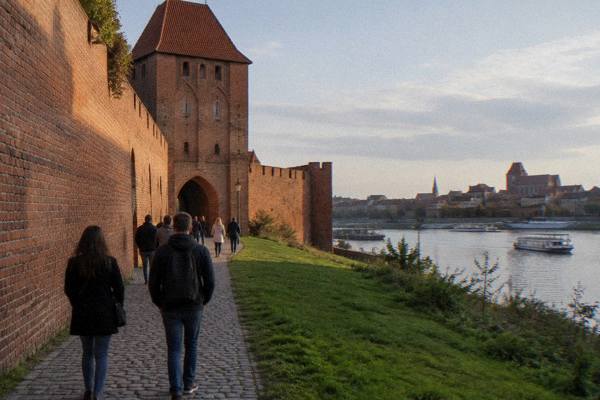
Toruń is famous for Copernicus, gingerbread first documented in 1380, and a UNESCO-listed medieval Old Town with Teutonic Castle ruins and a leaning tower.
What is Toruń, Poland famous for? Toruń, a city of 192,784 residents on the Vistula in northern Poland, is famous for being the birthplace of the astronomer Nicolaus Copernicus, for gingerbread with a first documented mention in 1380, and for a medieval Old Town inscribed on the UNESCO World Heritage list in 1997 under the official name Medieval Town of Toruń. Those three threads, one astronomer, one biscuit and one intact Gothic townscape, account for nearly everything the city is known for, and each of them is still visible on the ground today, in museums, in bakeries and in the brick of the streets themselves.
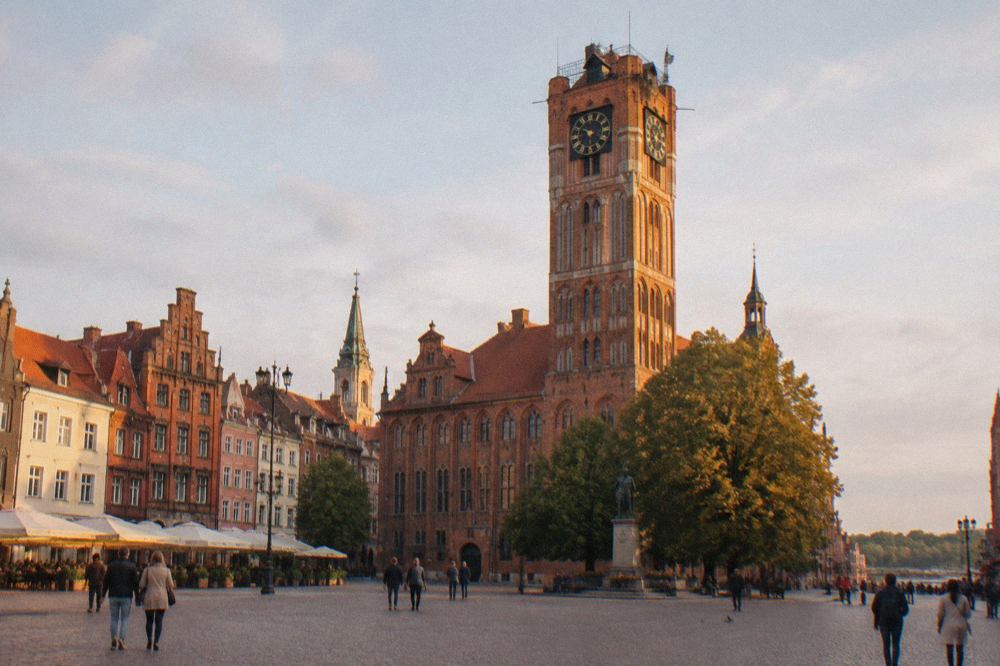
The UNESCO inscription covers three elements: the ruins of the Teutonic Castle, the Old Town and the New Town, ringed by defensive walls, inscribed under criteria (ii) and (iv). The city's tourist core sits on the right bank of the Vistula, and the whole ensemble is compact enough that the castle ruins stand 0.6 km, about 7 minutes on foot, from the main market square, Rynek Staromiejski. For anyone working out how the pieces fit together, the one day in Toruń itinerary walks the same ground in order.
What Is Toruń, Poland Famous For?
Toruń is famous for Copernicus, gingerbread and Gothic brick. The astronomer Nicolaus Copernicus was born in the city on 19 February 1473, the city's gingerbread carries a first documented mention of 1380, and its Old Town and New Town with the Teutonic Castle ruins were inscribed as the Medieval Town of Toruń on the UNESCO list in 1997.
Each of those three answers has a fixed address in the modern city. The Copernicus thread leads to the museum at ul. Kopernika 15/17. The gingerbread thread leads to two separate museums and the Kopernik factory, whose origin is dated to 1763. The UNESCO thread is the Old Town itself, with the town hall tower on Rynek Staromiejski as its viewing platform, a terrace at 40 m reached by 175 steps. The table below collects what each is and what entry costs at the time the museum price lists state.
| What Toruń Is Famous For | Where It Lives | Adult Ticket |
|---|---|---|
| Copernicus, born here 19 February 1473 | Dom Mikolaja Kopernika, ul. Kopernika 15/17 | 33 zl (reduced 28) |
| Gingerbread, first documented mention 1380 | Living Museum of Gingerbread, ul. Rabianska 9 | 42 zl (children, students, seniors 65+ 37) |
| Gingerbread, district museum branch | Muzeum Torunskiego Piernika, ul. Strumykowa 4 | Exhibition 33 zl (reduced 28); with baking workshop 52 zl (reduced 46) |
| Gothic Old Town Hall | Ratusz Staromiejski, Rynek Staromiejski | Exhibition halls 32 zl (reduced 27); tower 29 zl (reduced 26); both 52 zl (reduced 42) |
| Teutonic Castle ruins, destroyed 1454 | ul. Przedzamcze 3 | 20 zl (reduced 12) |
The Old Town Hall's museum closes on Monday and follows the district museum pattern, 10:00-18:00 May to September and 10:00-16:00 October to April; the tower is ticketed separately and is open all week. The Old Town Hall is free on Wednesday for its permanent exhibitions. The Copernicus House is free on Thursday for its permanent exhibitions.
Why Is Toruń Gingerbread Famous?
Toruń gingerbread is famous because its documented history runs from a first recorded mention in 1380 to a factory, Kopernik, whose origin is dated to 1763, and because the city now has two distinct museums devoted to it: the interactive Living Museum of Gingerbread at ul. Rabianska 9 and the district museum branch in the former Weese gingerbread factory at ul. Strumykowa 4.
The two museums are easily confused and are not run by the same organisation. The Living Museum of Gingerbread at ul. Rabianska 9 is privately run and built around an interactive gingerbread-baking show. Its price list gives 42 zl for an adult, 37 zl for children, students and seniors aged 65 and over, and 35 zl for disabled adults. It opens Monday to Sunday 10:00-18:00, shows start on the full hour, the ticket office opens 15 minutes before each show, and the English bilingual show runs at 14:00. The stated show length is about 75 minutes.
The Museum of Toruń Gingerbread at ul. Strumykowa 4 is a branch of the district museum housed in the former Weese gingerbread factory. Its price page gives 33 zl for the exhibition, 28 zl reduced, and 52 zl for the exhibition plus a baking workshop, 46 zl reduced. It opens Tuesday to Sunday, 10:00-18:00 May to September and 10:00-16:00 October to April, and closes on Monday. The practical difference is the format: one is a show on the hour, the other is an exhibition with an optional workshop. The Toruń gingerbread museums guide compares the two in detail, and the question of what city is famous for gingerbread has Toruń as its answer.
Gingerbread is also the city's default souvenir, and the shops around the Old Town sell it in decorated tins. The thread runs from the 1380 mention through the Kopernik factory, whose origin is dated to 1763, to the present museums, an unbroken record of food history.
Where Was Copernicus Born?
Nicolaus Copernicus was born in Toruń on 19 February 1473, and the Gothic townhouses at ul. Kopernika 15/17, now the Dom Mikolaja Kopernika museum, are traditionally held to be his family's house and presented as his reputed birthplace. He died on 24 May 1543 in Frombork.
The distinction matters and the museum states it plainly: the houses are linked to his family by tradition, and the exact birth house is not proven. What is proven is the city and the date. The museum itself covers Copernicus and medieval burgher life across two Gothic townhouses, and its price list gives 33 zl for an adult, 28 zl reduced, with an audioguide at 15 zl. It opens Tuesday to Sunday, 10:00-18:00 from 1 May to 30 September and 10:00-16:00 from 1 October to 30 April, closed Monday, and Thursday is free for the permanent exhibitions. The full story is on the Copernicus House page, and the question where was Copernicus born is answered at length there.
The astronomer also gave the city its monument: the Copernicus monument on Rynek Staromiejski, unveiled on 25 October 1853 and designed by Christian Friedrich Tieck. Between the house museum, the monument and the factory that borrowed his name for gingerbread in 1763, Copernicus is the thread that ties the city's two other claims together.
For a guided walk of the medieval streets where most of this sits, the Medieval Town Walking Tour is the option to look at, and its live listing carries current availability: Check availability.
What Makes The Old Town Of Toruń A UNESCO Site?
The Old Town of Toruń was inscribed on the UNESCO World Heritage list in 1997 as the Medieval Town of Toruń, under criteria (ii) and (iv), covering three elements: the ruins of the Teutonic Castle, the Old Town and the New Town, ringed by defensive walls.
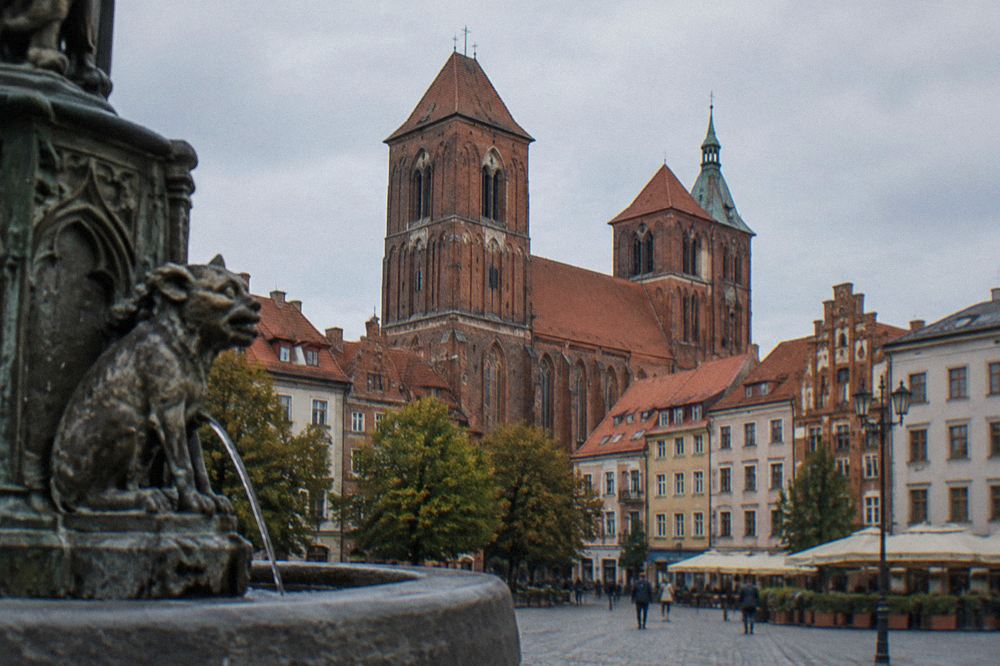
The inscription is unusually specific about scope, and the walls still define the visit. The Old Town moved to its present site in 1236, the town charter dates to 28 December 1233 under Kulm law, and the street plan from that period is what the UNESCO listing recognises. Two peace treaties are associated with the city, the First Peace of Thorn in 1411 and the Second in 1466. Walking the area is the point: the Old Town area guide covers the ground street by street, and the medieval core is compact, with the castle ruins 0.6 km from Rynek Staromiejski.
The town hall is the anchor building, a Gothic hall on Rynek Staromiejski and the main seat of Muzeum Okregowe w Toruniu, with a viewing tower whose terrace stands at 40 m up 175 steps. Tower opening hours run 10:00-16:00, 10:00-18:00 or 10:00-20:00 depending on season. Admission is 32 zl for the exhibition halls, 29 zl for the tower, or 52 zl for both, and Wednesday is free for the permanent exhibitions, with the tower ticketed separately.
What Are The Ruins Of The Teutonic Castle?
The ruins of the Teutonic Castle at ul. Przedzamcze 3 are the remains of the Teutonic Order's castle, pulled down by the townspeople in 1454, standing between the Old Town and the New Town and run today by Torunska Agenda Kulturalna, open Monday to Sunday 10:00-18:00 with adult admission at 20 zl.
The castle's end is the striking part of its story: the townspeople themselves pulled it down in 1454, and what stands now are the ruins of that demolition rather than a gradual decay. The site sits between the two medieval town cores, which is why it forms one of the three elements of the UNESCO inscription alongside them. At 0.6 km, about 7 minutes on foot, from Rynek Staromiejski, it is the easiest of the headline sights to fold into any walk. The full detail is on the Teutonic Castle ruins page.
Why Does Toruń Have A Leaning Tower?
Toruń's Leaning Tower is a 14th century Gothic defensive tower in the town wall that leans about 140 cm from vertical because the clay subsoil beneath it shifted, and its interior is currently inaccessible to visitors because of conservation works, though the exterior on ul. Pod Krzywa Wieza is free to see at any time.
The tower later served as a women's prison and a smithy, which is the whole of its recorded afterlife in the city's facts. Its present condition is the practical point: the operator, TAK, states that the interior is inaccessible to visitors while conservation works continue, and no reopening date is published, so the exterior is what a visitor sees. When open, admission was 20 zl, reduced 10 zl. The exterior costs nothing and needs no timetable, which makes it the one headline sight that fits any schedule; the Leaning Tower page carries the current status.
The tower is also the clearest example of why the city's fame is architectural as much as edible or astronomical: a construction fault in the clay has become one of its recognised sights, standing in the same defensive wall system the UNESCO listing describes.
Common Questions About What Toruń Is Famous For
What is Toruń famous for?
Toruń is famous for the astronomer Copernicus, born in the city on 19 February 1473, for gingerbread with a first documented mention in 1380, and for its medieval Old Town and New Town with the Teutonic Castle ruins, inscribed on the UNESCO list in 1997 as the Medieval Town of Toruń.
Is Toruń worth visiting?
The city's three claims, Copernicus, gingerbread and the UNESCO-listed medieval core, are all still visitable: a house museum at 33 zl, two gingerbread museums at 42 zl and 33 zl, and a town hall tower with a 40 m terrace up 175 steps. The is Toruń worth visiting page weighs the question in full.
Where in Poland is Toruń?
Toruń lies on the Vistula in northern Poland, with a population of 192,784 on 31 December 2025. The where is Toruń in Poland page maps the position and the rail links.
Was Copernicus born in the Copernicus House?
Copernicus was born in Toruń on 19 February 1473. The house at ul. Kopernika 15/17 is traditionally held to be the family's house and is presented as his reputed birthplace, but the exact house is not proven.
Can You Go Inside The Leaning Tower Of Toruń?
No. The interior is inaccessible to visitors because of ongoing conservation works, and no reopening date is published. The exterior on ul. Pod Krzywa Wieza is free to see at any time.
Toruń's fame rests on a birth certificate, a recipe and a street plan: one astronomer born here in 1473, one biscuit documented in 1380, and one Gothic townscape the UNESCO list has recognised since 1997, and all three are within a short walk of Rynek Staromiejski. This Toruń Travel Guide covers each of them in detail.