Medieval Town Of Toruń: The UNESCO Site
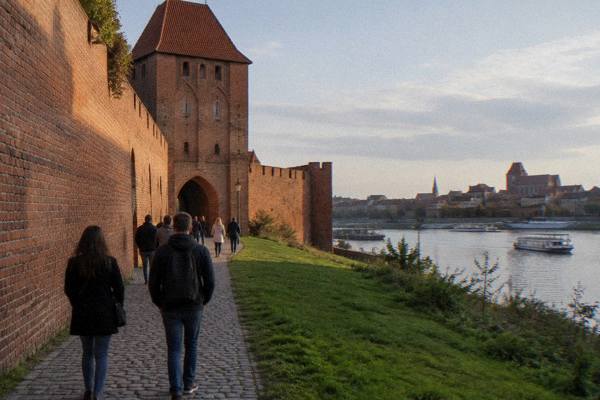
UNESCO inscribed the Medieval Town of Toruń on the World Heritage List in 1997, recognising three linked elements: the ruins of the Teutonic Castle, the Old Town and the New Town, ringed by defensive walls. The listing sits alongside Copernicus, born in the city on 19 February 1473, and a brick skyline that survived on its original medieval street plan.
Short answer
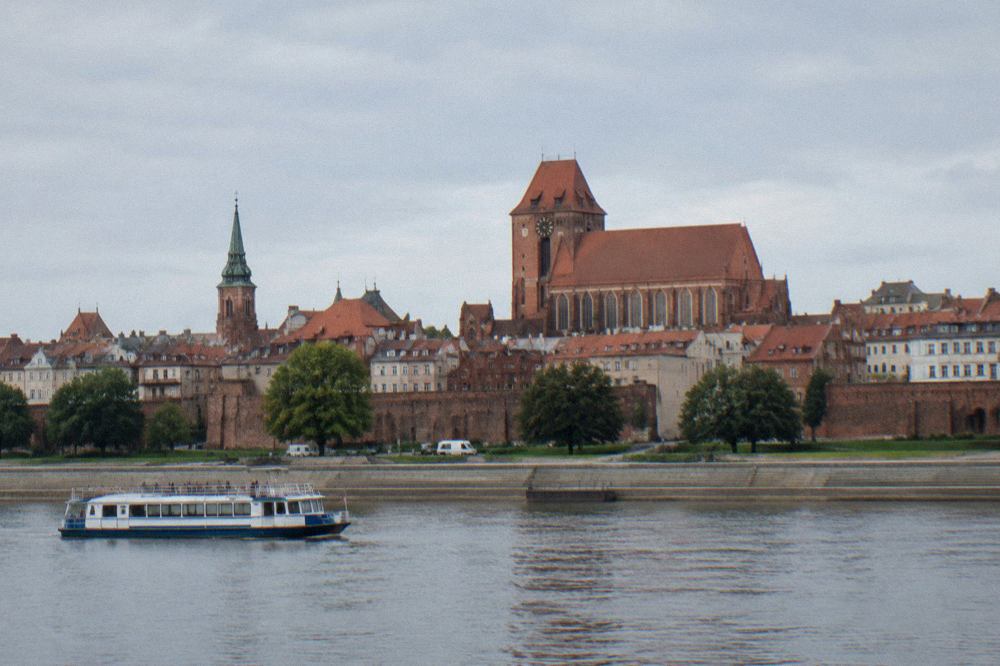
The Medieval Town of Toruń is a UNESCO World Heritage Site inscribed in 1997 under criteria (ii) and (iv). It covers the ruins of the Teutonic Castle, the Old Town and the New Town, ringed by defensive walls. Key sights include the Old Town Hall, the Cathedral of SS John the Baptist and John the Evangelist, the Leaning Tower and three surviving riverside gates.
The Medieval Town of Toruń entered the UNESCO World Heritage List in 1997, inscribed under criteria (ii) and (iv) for a compact core of brick Gothic on the right bank of the Vistula. The official property name is Medieval Town of Toruń, and the listing covers three elements: the ruins of the Teutonic Castle, the Old Town and the New Town, ringed by defensive walls. The city that grew around that core counted 192,784 residents on 31 December 2025, and the man who made it famous worldwide, Nicolaus Copernicus, was born here on 19 February 1473.
For anyone planning the practical side, the getting around Toruń guide covers the city transport that connects the station to the Old Town, and the how to get to Toruń guide covers the rail routes in.
What Is The Medieval Town Of Toruń UNESCO Site?
The Medieval Town of Toruń is a UNESCO World Heritage Site inscribed in 1997 under criteria (ii) and (iv), covering three elements in one property: the ruins of the Teutonic Castle, the Old Town and the New Town, all ringed by defensive walls. The town received its charter on 28 December 1233 under Kulm law, moved to its present site in 1236, and its brick Gothic core survived on the original medieval street plan.
The inscription name is exact: Medieval Town of Toruń, the spelling UNESCO itself uses. Criteria (ii) and (iv) are the formal grounds, and the three elements are the formal scope. The Old Town and the New Town sit side by side, with the castle ruins between them at ul. Przedzamcze 3, run by Torunska Agenda Kulturalna.
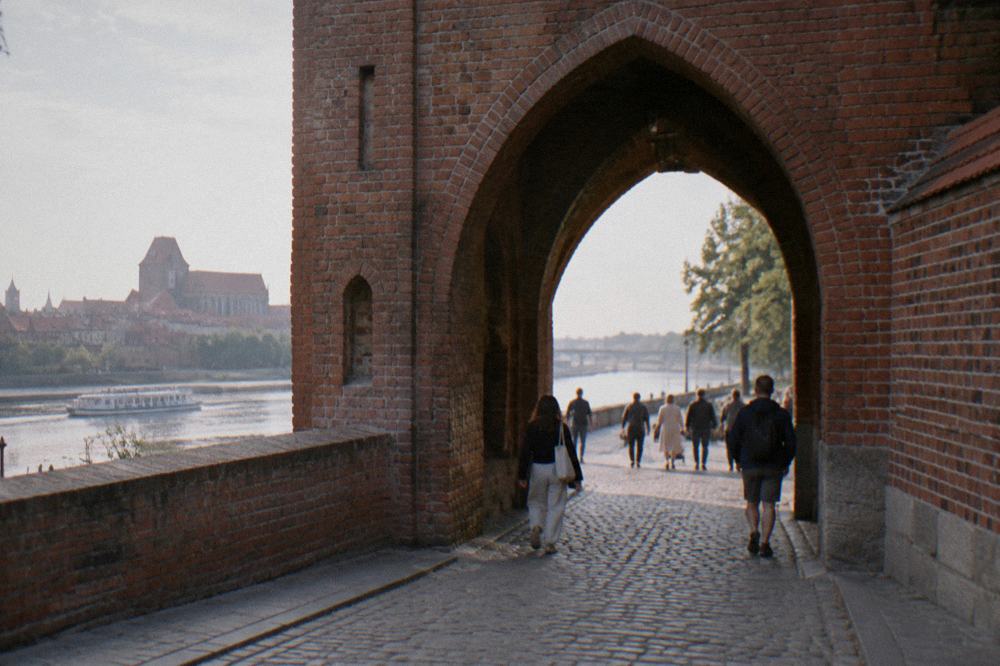
The two market squares anchor the two towns. Rynek Staromiejski carries the Old Town Hall, and the New Town holds St James's Church at ul. Swietego Jakuba 22, 0.7 km from Rynek Staromiejski, about 9 minutes on foot. The defensive ring that ties the three elements together survives in stretches of brick wall and three gates on the Vistula side: Brama Mostowa, Brama Zeglarska and Brama Klasztorna.
What Do The Three Elements Of The Inscription Include?
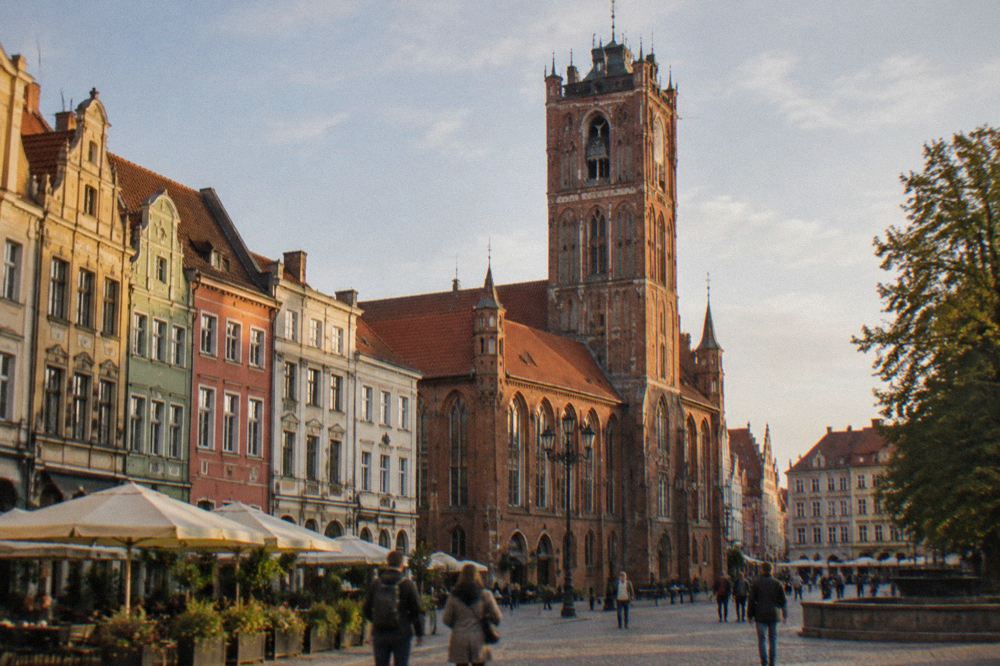
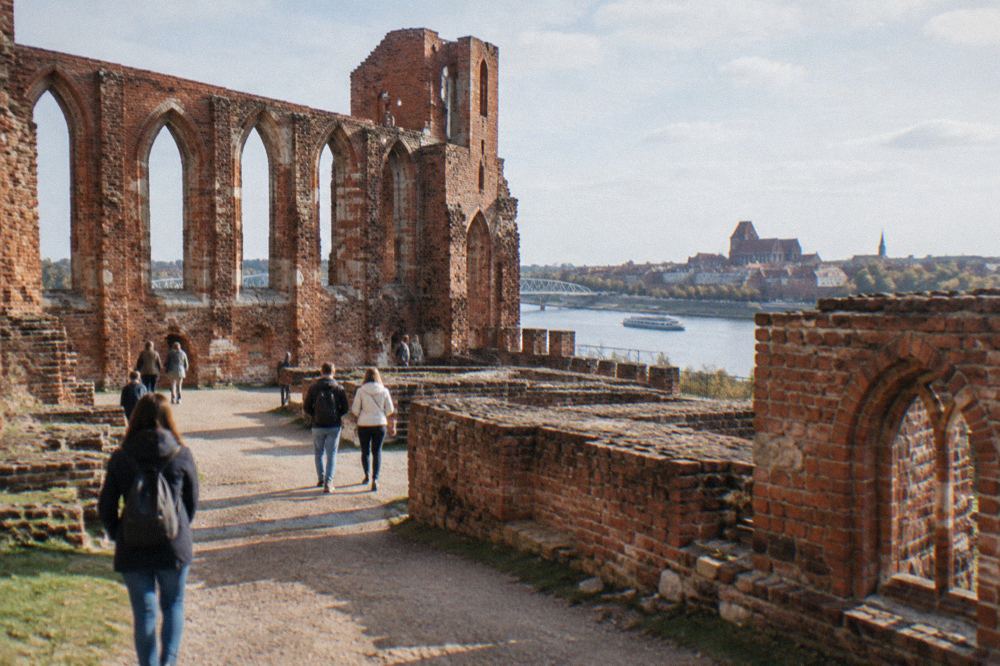
The inscription covers the Teutonic Castle ruins, the Old Town and the New Town. The castle at ul. Przedzamcze 3 was pulled down by the townspeople in 1454 and survives as ruins, the Old Town holds the Gothic town hall on Rynek Staromiejski and the Cathedral of SS John the Baptist and John the Evangelist, and the New Town is centred on St James's Church at ul. Swietego Jakuba 22, 0.7 km from Rynek Staromiejski.
Each element carries its own headline monument. The castle ruins, an adult ticket at 20 zl, reduced 12, open Monday to Sunday 10:00-18:00, stand 0.6 km from Rynek Staromiejski. The Old Town Hall on the main square is the Gothic seat of Muzeum Okregowe w Toruniu with a viewing tower whose terrace sits at 40 m, reached by 175 steps. The New Town's parish church, St James's, is a Gothic church 0.7 km out.
The cathedral on ul. Zeglarska belongs to the Old Town element. Its 52 m tower, climbed by over 200 steps, holds the view, and the nave holds the Tuba Dei bell, cast in 1500, weighing over 7 tons, the largest Gothic bell in Poland. The tower opens in the season April to October.
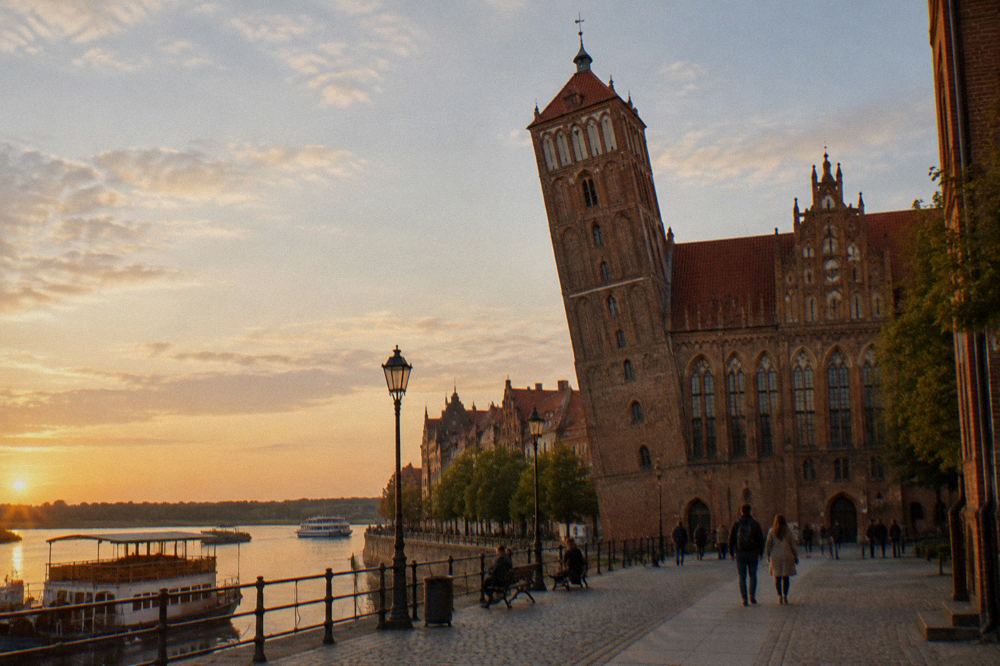
The walls are the connective tissue of the listing. The oldest surviving fragment, 6 m high, stands at the end of ul. Pod Krzywa Wieza, the same street where the Leaning Tower leans about 140 cm from vertical because the clay subsoil shifted beneath its 14th century foundations. That tower, later a women's prison and a smithy, is currently inaccessible to visitors inside, but its exterior is free street space, open at any time.
For a guided walk of the medieval streets, the Medieval Town Walking Tour is the option to look at, and the Budget Guided Sightseeing Walk runs as a lower-commitment alternative. The cards below carry the current details from the operator's live listings.
How Much Do The Key Monuments Cost To Enter?
The castle ruins charge 20 zl for an adult, reduced 12, open Monday to Sunday 10:00-18:00. The Old Town Hall exhibition halls cost 32 zl, reduced 27, the tower 29 zl, reduced 26, and a combined halls plus tower ticket 52 zl, reduced 42. The Leaning Tower charges 20 zl, reduced 10, when open, but its interior is currently inaccessible for conservation works, and the walls and gates are free, open street space.
The Old Town Hall follows the Muzeum Okregowe pattern: the museum is closed on Monday, open 10:00-18:00 from May to September and 10:00-16:00 from October to April. The tower keeps its own hours, open all week, 10:00-16:00, 10:00-18:00 or 10:00-20:00 depending on season. Wednesday is the free day for the permanent exhibitions, though the tower is ticketed separately.
| Monument | Adult ticket | Reduced | Opening pattern |
|---|---|---|---|
| Teutonic Castle ruins, ul. Przedzamcze 3 | 20 zl | 12 zl | Monday to Sunday 10:00-18:00 |
| Old Town Hall exhibition halls | 32 zl | 27 zl | Closed Monday; 10:00-18:00 May to September, 10:00-16:00 October to April |
| Old Town Hall tower, terrace at 40 m | 29 zl | 26 zl | Open all week; 10:00-16:00, 10:00-18:00 or 10:00-20:00 by season |
| Old Town Hall halls plus tower | 52 zl | 42 zl | Same pattern as the halls |
| Leaning Tower, ul. Pod Krzywa Wieza | 20 zl when open | 10 zl | Interior closed for conservation works; exterior free at any time |
The prices above are the 2026 figures for each monument. A combined halls plus tower ticket at 52 zl is the single highest entry in the table, and the walls and gates at the bottom edge of the old town cost nothing at all.
The cathedral tower on ul. Zeglarska, at 52 m with over 200 steps, opens in the season April to October.
Which Parts Of The UNESCO Site Are Free To See?
The three surviving gates on the Vistula side, Brama Mostowa, Brama Zeglarska and Brama Klasztorna, and the stretches of brick wall are free, open street space, as is the oldest wall fragment, 6 m high, at the end of ul. Pod Krzywa Wieza. The exterior of the Leaning Tower is free to see at any time, and the Old Town Hall's permanent exhibitions are free on Wednesday, with the tower ticketed separately.
The free layer of the site is substantial. The gates and wall fragments need no ticket, no opening hour and no planning beyond walking to them. The Leaning Tower, a 14th century Gothic defensive tower leaning about 140 cm from vertical, can only be seen from outside while the conservation works run, and that outside view costs nothing.
| Free element | What the facts state |
|---|---|
| Brama Mostowa, Brama Zeglarska, Brama Klasztorna | Three surviving gates on the Vistula side, free open street space |
| Oldest wall fragment, end of ul. Pod Krzywa Wieza | 6 m high, free to see |
| Leaning Tower exterior, ul. Pod Krzywa Wieza | Free at any time; interior closed for conservation works |
| Old Town Hall permanent exhibitions | Free on Wednesday; the tower is ticketed separately |
| Rynek Staromiejski and the medieval street plan | Open public space of the Old Town |
| New Town square and St James's Church exterior, ul. Swietego Jakuba 22 | 0.7 km from Rynek Staromiejski, about 9 minutes on foot |
The Copernicus monument on Rynek Staromiejski, unveiled 25 October 1853 and designed by Christian Friedrich Tieck, also stands in free public space at the heart of the Old Town.
How Does The Castle Ruins Section Fit Into The Visit?
The Teutonic Castle ruins stand between the Old and New Town at ul. Przedzamcze 3, 0.6 km from Rynek Staromiejski, about 7 minutes on foot, and are run by Torunska Agenda Kulturalna. The castle was pulled down by the townspeople in 1454, and the ruins open Monday to Sunday 10:00-18:00 with an adult ticket at 20 zl, reduced 12.
The position matters for route planning. Because the ruins sit between the two towns, they work as the hinge of a walk that starts on Rynek Staromiejski, crosses to the castle, and continues into the New Town to St James's Church 0.7 km from the main square. The whole chain is under two kilometres of walking on the medieval street plan.
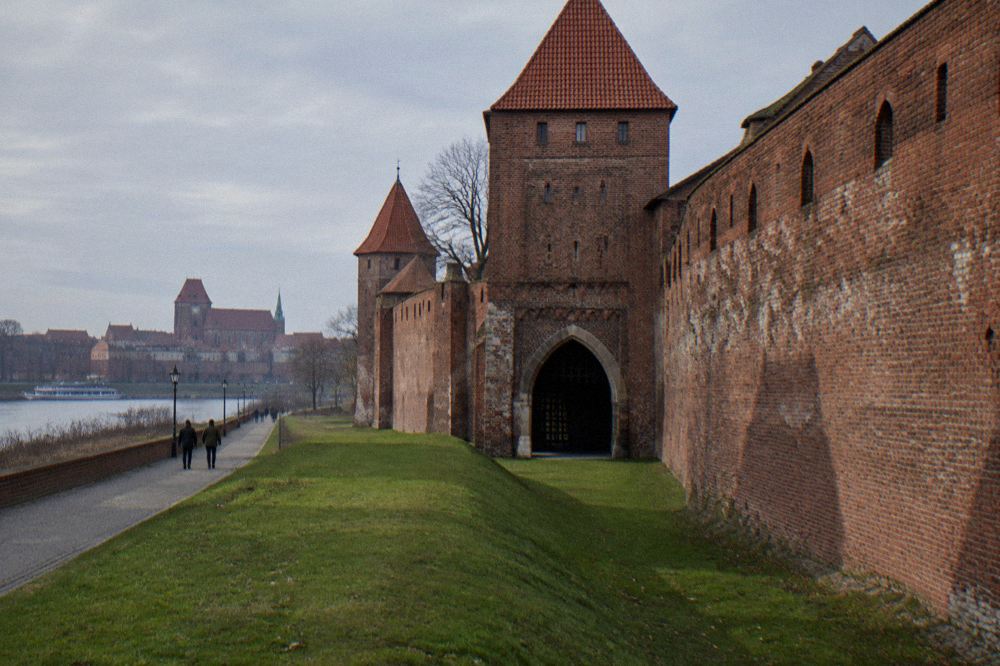
The 1454 destruction is the dated fact that explains the ruins: the townspeople pulled the Teutonic Order's castle down. What stands now is what that demolition left, open daily through the 10:00-18:00 window, with the same hours seven days a week.
For a private version of the same ground, the Budget Private Medieval Walk covers the medieval town on a private basis. The card below carries the live details.
How Much Time Do You Need For The UNESCO Core?
The three elements sit within walking distance of each other: the castle ruins 0.6 km from Rynek Staromiejski, about 7 minutes on foot, St James's Church 0.7 km, about 9 minutes, and the walls and gates threaded between them. A visitor who walks the chain, enters the castle ruins and climbs the Old Town Hall tower can cover the core in one full day, and the itineraries on this site break that into a one day and a two day plan.
Rynek Staromiejski is the natural base: the hall and tower are on it, the castle is 7 minutes away, the New Town church 9 minutes, and the riverside gates line the walk down toward the Vistula.
Practical planning pages on this site carry the detail: the best time to visit Toruń guide handles the seasons, the where to stay in Toruń guide handles the districts, and the rail pages, including the Toruń train stations guide, handle arrival. Toruń Miasto station is the nearer one, 1.4 km and about 18 minutes on foot to Rynek Staromiejski; Toruń Główny sits on the far bank, 2.3 km and about 30 minutes on foot.
When Is The Best Season To See The Medieval Town?
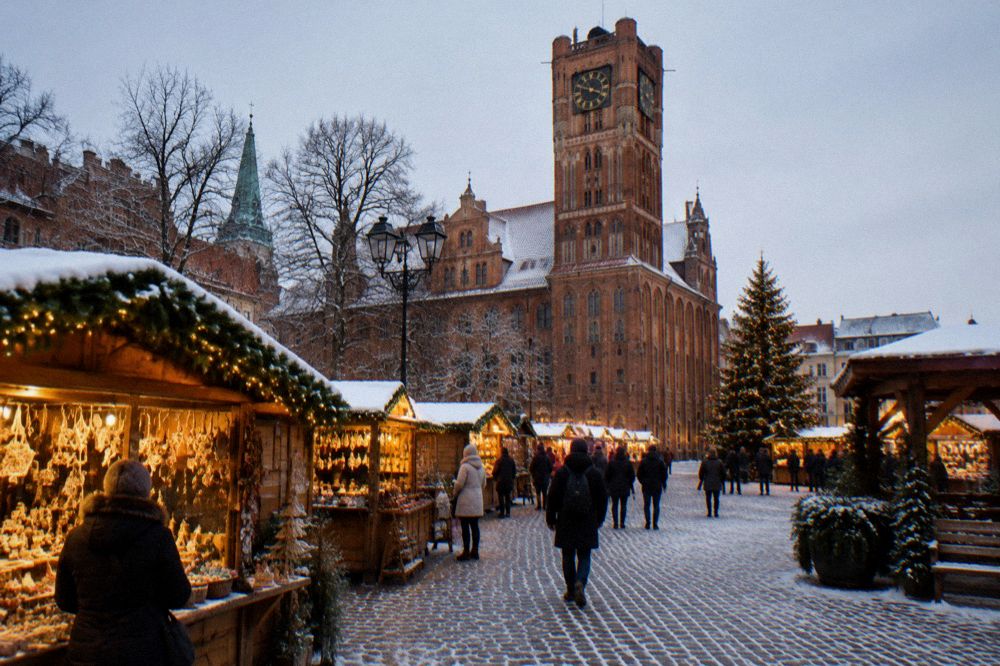
The climate normals for Toruń show July as the warmest month, with a mean of 19.3 C and a mean high of 25.1 C, and January as the coldest, with a mean of -1.1 C and a mean low of -3.8 C. December records 16.3 days with precipitation and April 10.7, with sunshine peaking in May at 244 hours. The Christmas market stalls trade daily from 20 November 2026 to 10 January 2027.
The seasonal pull is real and dated. The market brings the winter crowds into the Old Town for the stretch from 20 November 2026 to 10 January 2027, and the Toruń Christmas market guide covers it in full. For monument hours, the season matters twice over: the Old Town Hall museum runs 10:00-18:00 from May to September and 10:00-16:00 from October to April, and the cathedral tower opens only April to October.
| Season | What the facts support |
|---|---|
| May to September | Old Town Hall museum open 10:00-18:00; July mean high 25.1 C |
| October to April | Old Town Hall museum open 10:00-16:00; closed Monday |
| April to October | Cathedral tower on ul. Zeglarska open for climbing, over 200 steps |
| 20 November 2026 to 10 January 2027 | Christmas market stalls trade daily inside the Old Town |
| July | Warmest month, mean 19.3 C; highest precipitation of the year, 90.6 mm |
The rainiest single month in the normals is July, with 90.6 mm, against 27.3 mm in February. Days with precipitation run from 10.7 in April to 16.3 in December, so a summer visit trades warmth for the highest monthly rainfall figure and a winter visit trades the market for the shortest days, 34.9 sunshine hours in December against 244 in May.
How Do You Get To The Medieval Town Of Toruń?
Toruń Miasto station is the nearer rail stop for the UNESCO core, 1.4 km and about 18 minutes on foot to Rynek Staromiejski, while Toruń Główny sits on the left bank of the Vistula, 2.3 km and about 30 minutes on foot. Direct PKP Intercity trains from Warszawa Centralna take about 2 hours to 2 hours 17 minutes, from Gdansk Glowny about 2 hours 17 minutes to 2 hours 25 minutes, and from Poznan Glowny about 1 hour 24 minutes to 1 hour 29 minutes.
The station choice decides the first half hour of the visit. Toruń Miasto drops a visitor on the right bank, inside an 18 minute walk of the main square, while Toruń Główny requires the crossing of the river, on foot or by city transport. PKP PLK opened a tender in late September 2026 to rebuild Toruń Miasto and Toruń Wschodni, with new platforms and underpasses and planned completion in 2029, but no works are on site yet.
The arrival routes have their own pages: Warsaw to Toruń, Gdańsk to Toruń, Poznań to Toruń and Bydgoszcz to Toruń, the last with direct PKP Intercity trains taking about 33 minutes to 36 minutes. Bydgoszcz Airport, the closest at 55 km by road, is covered on the Toruń airport page.
For the walk itself, the Medieval Town Walking Tour remains the guided option matched to this site, and its operator's live listing carries the current schedule: Check availability. The Toruń Travel Guide homepage collects the site's full coverage of the city.
What Else Should You Know Before Visiting The Medieval Town Of Toruń?
Poland applies Schengen rules in full, and the Entry Exit System has been fully operational since 10 April 2026, when it replaced passport stamping. ETIAS is not in operation and no applications are collected. The currency is the Polish zloty, with cards accepted virtually everywhere in shops per the Polish Tourism Organisation, and the city counted 192,784 residents on 31 December 2025.
Short stays run to 90 days in any 180 day period across the Schengen area, and the United States, Canada, Australia and the United Kingdom are all visa exempt for it. The practical money point is simpler: admission prices are in zloty, the Old Town Hall halls plus tower ticket at 52 zl being the highest single entry among the monuments here, and cards cover the shops.
Gingerbread belongs to the city's merchant past, with a first documented mention in 1380, and the Toruń gingerbread guide covers where that tradition fits into a visit. The Toruń events guide tracks the festival calendar, and the Toruń museums guide covers the Muzeum Okregowe branches beyond the hall.
For the budget question, the is Toruń expensive guide works through the costs. For a lower-commitment guided option across the same medieval ground, the Budget Guided Sightseeing Walk runs daily sightseeing walks, and the card below carries the live details.
Common Questions About The Medieval Town Of Toruń
When did the Medieval Town of Toruń become a UNESCO World Heritage Site?
The Medieval Town of Toruń was inscribed on the UNESCO World Heritage List in 1997, under criteria (ii) and (iv).
What does the UNESCO inscription in Toruń cover?
Three elements in one property: the ruins of the Teutonic Castle, the Old Town and the New Town, ringed by defensive walls.
How much does it cost to visit the Teutonic Castle ruins in Toruń?
An adult ticket to the castle ruins at ul. Przedzamcze 3 costs 20 zl, reduced 12, and the site opens Monday to Sunday 10:00-18:00.
Can you go inside the Leaning Tower in Toruń?
No. The interior is closed for conservation works and no reopening date is published. The exterior on ul. Pod Krzywa Wieza is free to see at any time.
How far is the Teutonic Castle from the Old Town Hall in Toruń?
The castle ruins stand 0.6 km from Rynek Staromiejski, about 7 minutes on foot.
Is the Old Town Hall tower worth climbing in Toruń?
The tower's viewing terrace sits at 40 m, reached by 175 steps, and the ticket costs 29 zl, reduced 26. It is open all week, with hours of 10:00-16:00, 10:00-18:00 or 10:00-20:00 depending on season.