What Is The Meaning Of Toruń?
The origin of the name Toruń is uncertain, but linguists point to an Old Slavic word for a beaten track, and the German form Thorn records two centuries of Prussian rule.
What is the meaning of Toruń? The honest answer is that the origin of the name is uncertain: Wiktionary marks the etymology as uncertain and offers Old Polish "tor" as a possible root, while the Oldenburg online lexicon, in its entry on Thorn/Torun by Beata Lakeberg from 2012, records that some linguists and historians derive the name from the Old Slavic word "tor", a beaten track, which would give roughly "settlement by the road". A local legend offers a livelier story, deriving the name from the sentence "To run!" ("Then crumble!"), though Wiktionary classes this as likely folk etymology. The city on the Vistula carries a Polish name, a German name and a Latin name, and each one records a chapter of its past.
What Is The Meaning Of Toruń?
The meaning of Toruń is not settled. The name is generally traced to the Old Slavic word "tor", a beaten track, which would make the name mean roughly "settlement by the road", and this is the explanation the Oldenburg online lexicon records in its 2012 entry on Thorn/Torun by Beata Lakeberg. Wiktionary, however, marks the etymology as uncertain and lists Old Polish "tor" only as a possible root, so the road theory is the leading explanation rather than a proven one.
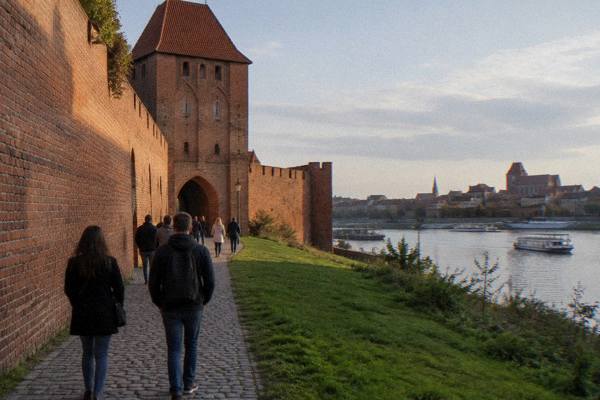
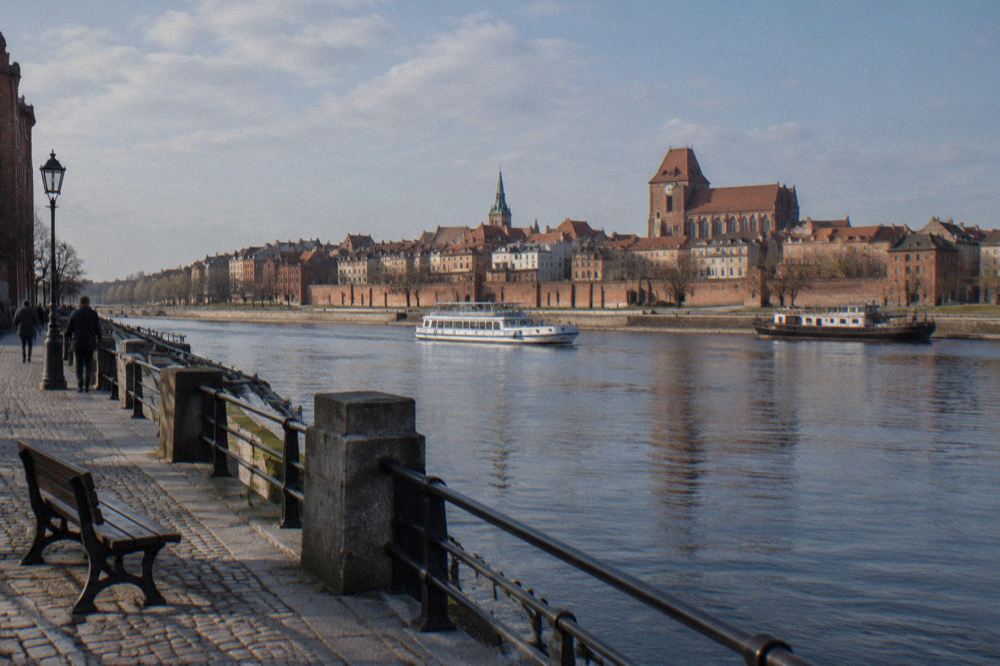
The beaten-track reading fits the city's geography in a way a reader can still check on the ground. Toruń stands on the Vistula in northern Poland, and its medieval wealth grew around a crossing point on that river. A settlement by the road, by this reading, is a settlement by the route that crossed the Vistula here.
The folk legend tells it differently. In that version the name comes from the spoken sentence "To run!", rendered in English as "Then crumble!", a story Wiktionary describes as likely folk etymology. It is a tale attached to the name after the fact rather than an explanation of its origin, and it is the kind of story a guide on the Old Town squares may still tell.
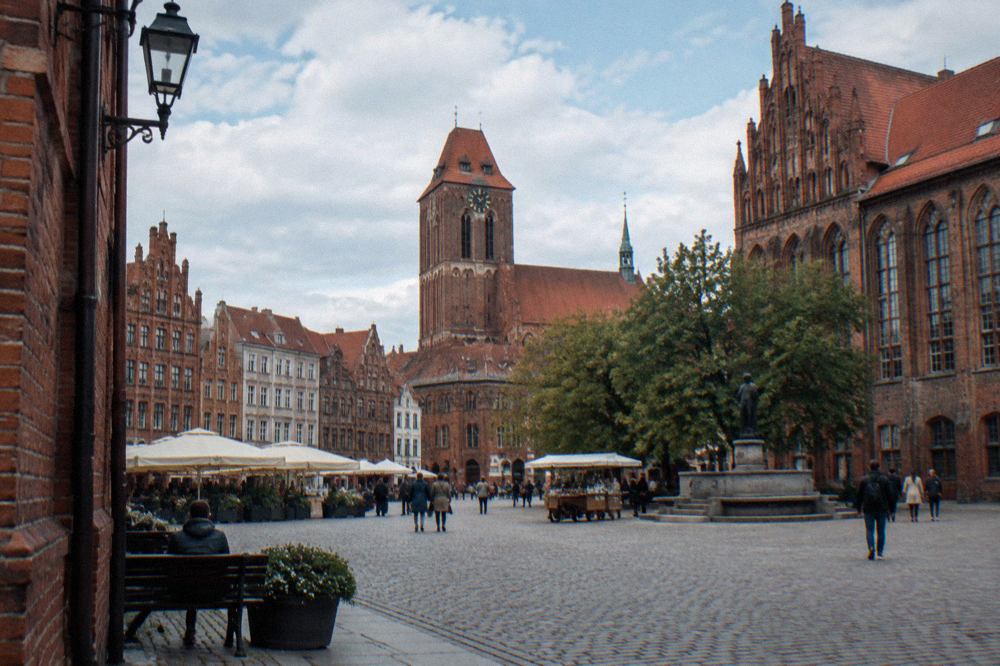
For anyone who wants the places rather than the word, the medieval Old Town itself is the UNESCO-listed heart of the city, and a medieval town walking tour route through it pairs naturally with the question of where the name began.
Why Does The German Name Thorn Exist?
The German name Thorn exists because the city spent more than a century under Prussia and Germany: Toruń was under the Polish Crown from 1466 to 1793, then under Prussia and Germany as Thorn until 1920. Under the Treaty of Versailles the city returned to Poland, and on 18 January 1920 units of the Polish Pomeranian Division entered Toruń, with the first Pomeranian voivode, Stefan Laszewski, arriving two days later. The German form is a record of that period, not a rival meaning.
The two names still travel together. German-language maps and older histories call the city Thorn, and the Latin chronicles knew it as Thorunia or Torunium. The Polish form, Toruń with an acute accent over the n, is the one the city uses today and the one UNESCO uses in its listing.
| Language | Name form | Period it records |
|---|---|---|
| Polish | Toruń | The city's name today, and its name at the founding in 1233 |
| German | Thorn | The Prussian and German period, 1793 to 1920 |
| Latin | Thorunia, Torunium | The forms used in medieval documents |
The name change of 1920 was a political event with a physical moment. The Polish Pomeranian Division entered the city on 18 January 1920, and Stefan Laszewski, the first Pomeranian voivode, arrived on 20 January. A reader standing on the Old Town squares is standing in a city that has answered to both names within living memory of a single century.
For seeing the streets where this history sits, the Medieval Town Walking Tour is the option to look at, and the Budget Guided Sightseeing Walk covers the same ground at a lower tier. An Evening Cruise, 50 Minutes on the Vistula shows the city from the water that made it.
Where Did Toruń First Stand?
Toruń was founded on 28 December 1233, and its first site was not the present one: the town first stood at the Vistula crossing in Stary Toruń, where the Teutonic Knights built their first stronghold in the Chełmno Land, by legend on a spreading oak, and it was moved to its present site in 1236. The name therefore predates the Old Town that visitors walk today, and it belongs first to a settlement a short distance away.
The move of 1236 is the practical fact for a visitor. The UNESCO-listed Medieval Town of Toruń, inscribed in 1997, covers the ruins of the Teutonic Castle, the Old Town and the New Town, ringed by defensive walls, and all of that stands on the second site. The first stronghold's story survives at the ruins of the Teutonic Castle, inside the present city.
The founding date also explains the name's paper trail. A town chartered on 28 December 1233 under Kulm law needed a name for its documents, and the Latin forms Thorunia and Torunium are the ones those documents carried. The legend of the spreading oak belongs to the first stronghold, and it is a legend, not a dated fact. The full index of guides sits on Toruń Travel Guide.
How Does The Name Toruń Live On Today?
The name lives on in three visible ways: the adjective "torunski" gives Toruń gingerbread its Polish name, "pierniki torunskie"; the two Peaces of Thorn, 1411 and 1466, carry the German form into European history, with the second sworn in the Artus Court in 1466; and UNESCO lists the World Heritage site as "Medieval Town of Toruń". A visitor meets the name on every shop sign, in the Artus Court and in the gingerbread wrappers.
The second Peace of Thorn is the one with a footprint on the ground. It was sworn in the Artus Court in 1466 and returned Royal Prussia and Warmia to Poland, and the Artus Court building where it was sworn stands in the Old Town. The name in that treaty is Thorn, the German form, because that was the name the documents of 1466 used.
The adjective is the everyday form. Toruń gingerbread, first documented in 1380, is "pierniki torunskie" in Polish, and the word "torunski" appears wherever the city's name is turned into a description. The gingerbread museums carry the same adjective in their branding.
The UNESCO listing ties the name to the place. The site is listed as "Medieval Town of Toruń", inscribed in 1997 under criteria (ii) and (iv), and that official spelling is the one the certificate and the documentation use.
| The name today | Where it appears |
|---|---|
| Toruń | The city's name, on the UNESCO listing "Medieval Town of Toruń" |
| Thorn | The historical form, in the names of the two Peaces of Thorn, 1411 and 1466 |
| torunski | The adjective, in "pierniki torunskie", Toruń gingerbread |
For a reader planning a visit around this history, the Medieval Town Walking Tour is the guided option that fits it, and its live listing carries current availability: Check availability. The question of where Toruń sits in Poland and the story of where Copernicus was born both start from the same medieval town this name belongs to.
Common Questions About The Meaning Of Toruń
What is the meaning of Toruń?
The origin is uncertain. Wiktionary marks the etymology as uncertain and offers Old Polish "tor" as a possible root, and the Oldenburg online lexicon records that some linguists and historians derive the name from the Old Slavic word "tor", a beaten track, giving roughly "settlement by the road".
Why is the German name Thorn?
The city was under Prussia and Germany as Thorn from 1793 to 1920, after just over three centuries under the Polish Crown from 1466. Under the Treaty of Versailles it returned to Poland, with Polish units entering on 18 January 1920.
Is the legend about the name true?
A local legend derives the name from the sentence "To run!" ("Then crumble!"). Wiktionary classes this as likely folk etymology, a story attached to the name after the fact.
What does torunski mean?
"Torunski" is the adjective from Toruń. Toruń gingerbread is "pierniki torunskie" in Polish.
What was Toruń called in Latin?
The Latin forms are Thorunia and Torunium, the names used in the medieval documents of a town founded on 28 December 1233.
The name of this city is a small piece of philology with a long political history attached, and a visitor who knows both meanings, the beaten track and the Prussian Thorn, reads the street signs of Toruń with a sharper eye.