How Do You Pronounce "Toruń"?
Toruń is pronounced roughly TOH-roon, with the stress on the first syllable and a soft ny at the end. Here is how the Polish and English renderings work.
How do you pronounce "Toruń"? The Polish Wiktionary entry for the city gives the pronunciation as IPA [ˈtɔrũɲ], with two audio recordings attached to the entry, and the stress mark in that transcription sits on the first syllable. A plain-English reading of the Polish is TOH-roon(y): the o is the vowel of "more" cut short, the u is an "oo", and the word ends on a soft "ny" rather than a hard "n".
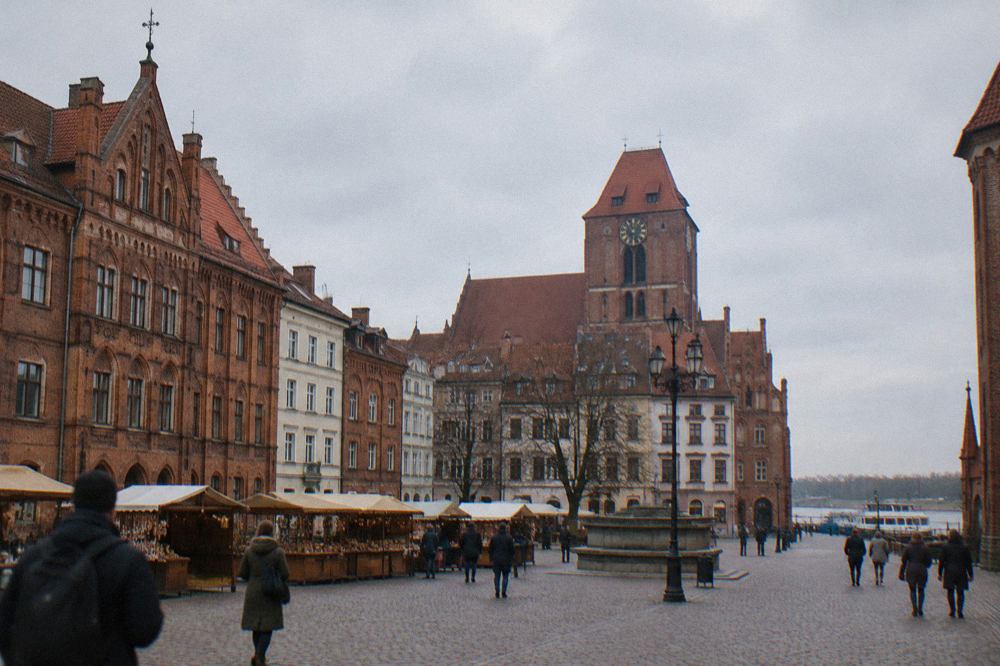
The name is short, only two syllables, which is one reason it trips English speakers up. Polish stresses the second-to-last syllable, and with two syllables that puts the stress right at the front: TO-run, not to-ROON. Once that pattern is set, the rest of the word follows.
How Do You Pronounce "Toruń"?
In Polish, Toruń is IPA [ˈtɔrũɲ], with the stress on the first syllable, so the word moves as TOH-roon: a short "o", an "oo" vowel, and a palatal n at the end. The final letter is the Polish n with an acute accent, which stands for the palatal nasal [ɲ], the same "ny" sound as in English "canyon" or the Spanish n with tilde.
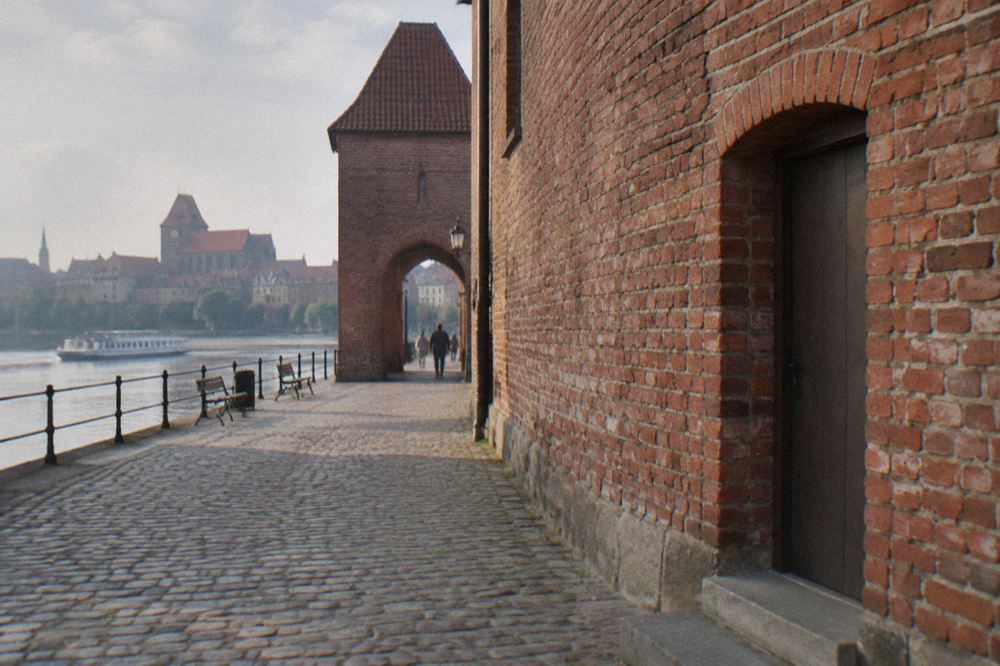
That final n-acute is the detail most English readers skip. The accent is not decoration and it carries no stress: it changes the consonant itself from a plain n to the softer [ɲ]. Anyone who can say "canyon" already makes this sound in the middle of that word; here it simply sits at the end of the city's name.
The stress follows a fixed Polish rule rather than a Toruń quirk. Polish stresses the second-to-last syllable, and because Toruń has exactly two syllables, the stress lands on the first. The IPA transcription on the Polish Wiktionary entry marks it the same way.
What Are The Accepted English Pronunciations Of Toruń?
English Wiktionary lists the anglicised pronunciations UK /ˈtɒrʊnjə/ and US /ˈtɔːruːn(jə)/ or /ˈtoʊruːn/, and Merriam-Webster gives two renderings, TOR-oon and TOR-oon-yuh, both with the stress on the first syllable. So an English speaker saying TOR-oon or TOR-oon-yuh is aligned with the dictionaries.
The two dictionary traditions do not fully agree on the ending. The UK form and one US form keep a small yuh after the n, matching the Polish [ɲ], while the other US form drops it. Both keep the stress at the front, which is the one point every rendering shares with the Polish original.
A visitor who settles on TOH-roon, first syllable stressed, will be understood and will land close to the Polish. The plain-English approximation read from the Polish IPA is TOH-roon(y), with the parenthesised ending for anyone comfortable with the softer consonant.
| Source | Rendering | Notes |
|---|---|---|
| Polish Wiktionary | IPA [ˈtɔrũɲ] | Stress on the first syllable; two audio recordings on the entry |
| English Wiktionary, UK | /ˈtɒrʊnjə/ | Anglicised, keeps the final yuh |
| English Wiktionary, US | /ˈtɔːruːn(jə)/ or /ˈtoʊruːn/ | Two listed forms |
| Merriam-Webster | TOR-oon, TOR-oon-yuh | Stress on the first syllable |
For a guided walk of the medieval streets where the name is spoken aloud all day, the Medieval Town Walking Tour is the option to look at, and Check availability on the operator's live listing.
Why Does The Spelling Of Toruń Sometimes Drop The Accent?
The official UNESCO inscription names the World Heritage property "Medieval Town of Toruń", with the Polish n-acute in the official spelling, while English texts often drop the accent and write "Torun". Both spellings point to the same city; the accented form is the Polish one and the plain form is the usual English simplification of it.
The accent matters for pronunciation because it flags the palatal nasal. Strip it and the letter reads as a plain n, which pushes an English reader toward to-ROON with a hard ending, exactly the two errors the dictionaries warn against. Keeping the stress on TO and a soft ny is worth more than the spelling itself. Other pages covering the same trip are gathered on Toruń Travel Guide.
The city has other names with their own pronunciations. The German name is Thorn, and the Latin forms are Thorunia and Torunium, spellings a visitor meets on older maps and inscriptions. More on what the city is known for sits in what Toruń is famous for.
What Words Come From The Name Toruń?
The Polish adjective is "toruński", written with the n-acute, and residents are "torunianin" for a man and "torunianka" for a woman; the forms "toruniak" and "torunczyk" also exist. Each keeps the same first-syllable stress as the city name.
These words follow the adjective rule rather than the noun's shape, so the ending changes while the front of the word holds steady. A visitor reading a museum label or a menu will meet "toruński" attached to the local gingerbread, whose first documented mention is 1380, and the Kopernik factory whose origin is 1763. The story of that local specialty is covered in Toruń gingerbread museums, and the wider case for the trip is laid out in is Toruń worth visiting.
Common Questions About Pronouncing Toruń
How do you pronounce "Toruń"?
Roughly TOH-roon, with the stress on the first syllable, the u as "oo", and a soft "ny" at the end. The Polish IPA is [ˈtɔrũɲ].
Is the stress on the first or second syllable?
On the first: TO-run. Polish stresses the second-to-last syllable, and the word has two syllables.
What does the accent over the n mean?
The letter is the Polish n with an acute accent, standing for the palatal nasal [ɲ], the "ny" sound in "canyon".
What is the German name for Toruń?
The German name is Thorn. The Latin forms are Thorunia and Torunium.
Said aloud as TOH-roon(y), the name matches the Polish IPA [ˈtɔrũɲ] on every point: first-syllable stress, the short o, the oo vowel, and the palatal n that closes it.