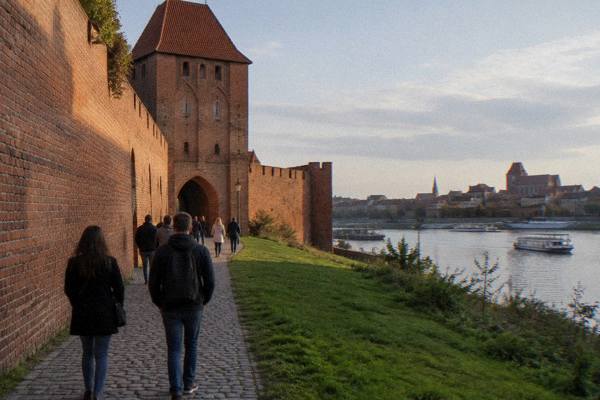
St Mary's Church In Toruń
A Gothic former Franciscan church in the north-west corner of Toruń's Old Town, St Mary's Church holds wall paintings from the 1380s, richly carved stalls from the first half of the 15th century and the Baroque mausoleum of the Swedish princess Anna Vasa.
Short answer
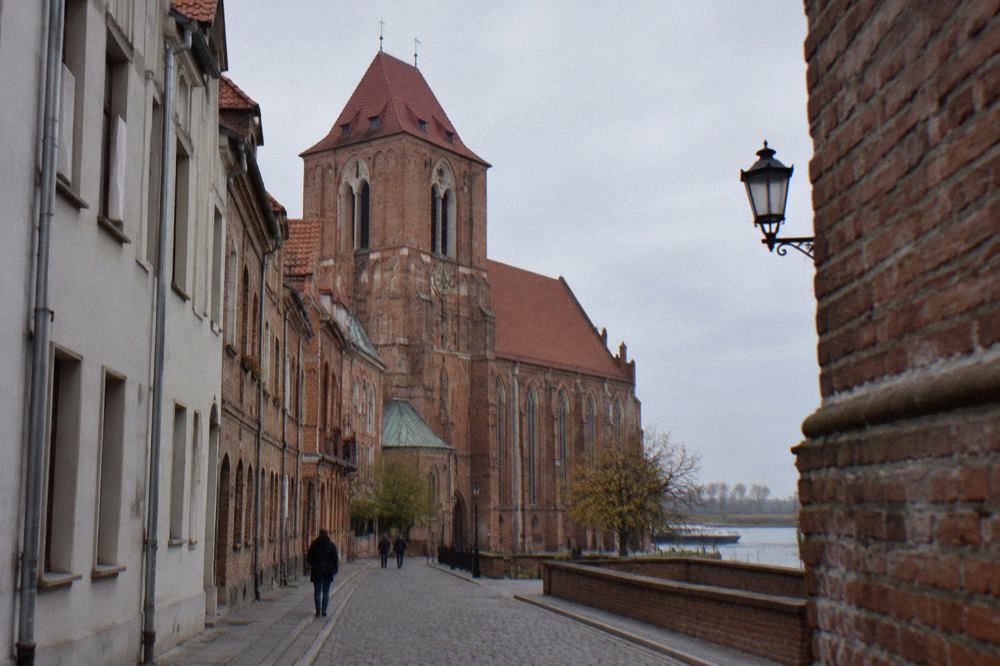
St Mary's Church (Kosciol Wniebowziecia NMP) is a Gothic former Franciscan church beside the Planetarium in the north-west corner of the Old Town. Built in the second half of the 14th century, it holds wall paintings of saints from the 1380s, carved wooden stalls from the first half of the 15th century and the Baroque mausoleum of Anna Vasa.
St Mary's Church (Kosciol Wniebowziecia NMP) stands in the north-west corner of the Old Town, beside the Planetarium, and it is one of the quietest big statements in a city full of Gothic brick. The Franciscans who built it had come to Toruń in 1239, only a few years after the town was founded, and the church itself went up in the second half of the 14th century. Inside, the city singles out wall paintings of saints made in the 1380s, and richly carved wooden stalls from the first half of the 15th century line both sides of the large chancel.
What Is St Mary's Church In Toruń?
St Mary's Church is a Gothic former Franciscan church, formally the Church of the Assumption of the Blessed Virgin Mary, built in the second half of the 14th century in the north-west corner of the Old Town. The Franciscans had come to Toruń in 1239, only a few years after the town was founded, and in keeping with the Franciscan rule the church has no tower. It stands beside the Planetarium on ul. Franciszkanska.
The order's arrival so early in the town's life explains the address. The Franciscans settled at the edge of the medieval street plan, and the church they eventually raised kept the plain silhouette their rule required: a Gothic body with no tower, unlike the Cathedral of Saints John across the river or the Old Town Hall Tower that dominates the main square. The building sits inside the line of the city walls and gates, a few minutes' walk from the heart of the Old Town.
The church's later history is a record of the city's religious divides. From 1557 to 1724 it was in Protestant hands. It was returned to Catholics in 1724, after the religious riots known as the Tumult of Toruń, and Bernardine friars then held the church and friary for nearly 100 years. For a full picture of the medieval core, including this church, the Medieval Town Walking Tour is the guided option to look at, and Check availability on the operator's live listing.
What Can You See Inside St Mary's Church?
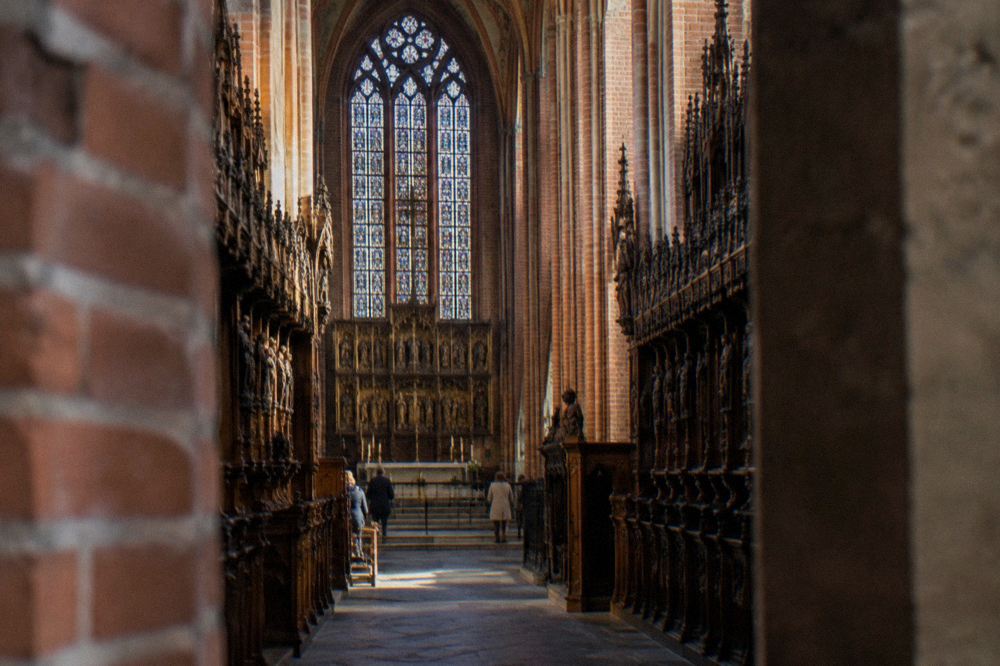
Inside St Mary's Church, the city singles out the wall paintings of saints made in the 1380s, and richly carved, tall wooden stalls from the first half of the 15th century line both sides of the large chancel. Visit Torun lists monumental Gothic frescoes of the 14th century, Baroque and Rococo altars, a Renaissance organ, a pulpit and epitaphs of Toruń patrician families, all under a star vault.
The stalls are a few decades younger than the paintings, and together they give the chancel its character. The star vault above them carries the eye upward, while the walls and floor hold Renaissance and Baroque epitaphs and grave slabs, some medieval. The mix is the point: a Gothic shell filled, century by century, with the memorials of Toruń patrician families who paid for altars, organs and epitaphs.
| Element | Period | What The Facts Say |
|---|---|---|
| Wall paintings of saints | 1380s | Singled out by the city inside the church |
| Wooden stalls | First half of the 15th century | Richly carved, tall, lining both sides of the large chancel |
| Gothic frescoes | 14th century | Listed by Visit Torun as monumental |
| Altars | Baroque and Rococo | Listed by Visit Torun |
| Organ | Renaissance | Listed by Visit Torun |
| Epitaphs and grave slabs | Renaissance and Baroque, some medieval | On the walls and floor, including patrician family epitaphs |
For a guided walk that puts the medieval streets and their churches in context, the Medieval Town Walking Tour is the option to look at.
Who Was Anna Vasa, And Why Is Her Mausoleum Here?
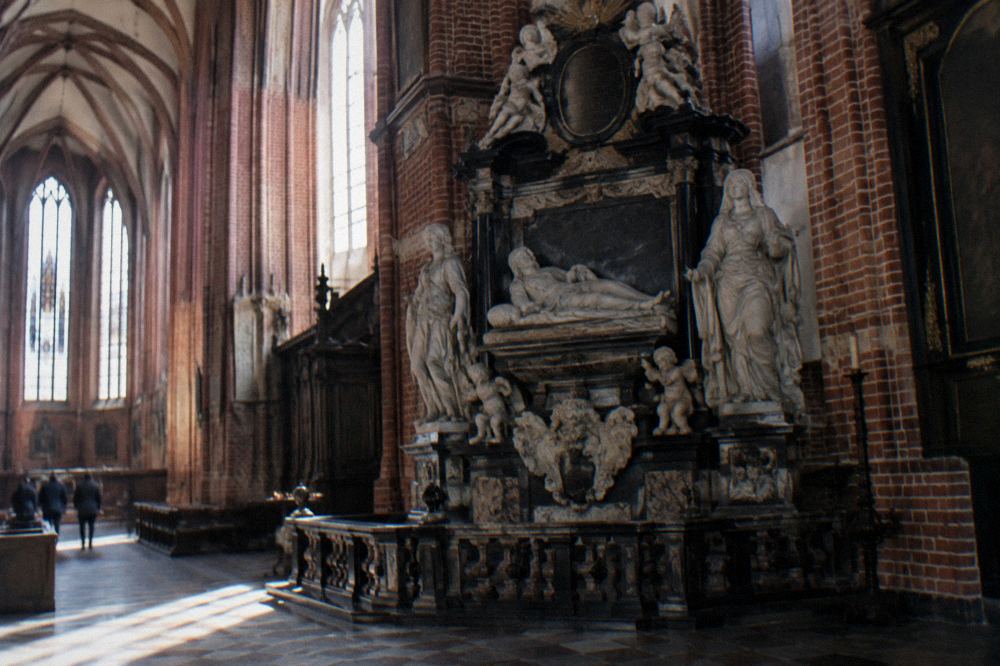
In 1636 St Mary's Church held the funeral of the Swedish princess Anna Vasa, sister of King Sigismund III Vasa of Poland. Catholic clergy had opposed her burial in Krakow because she was a Protestant. Her Baroque mausoleum stands in the chancel, and it remains one of the church's defining monuments.
The story is unusual for a Polish church. A Swedish princess, the sister of a Polish king, refused a Catholic burial in Krakow and laid to rest in Toruń, in a church that was then in Protestant hands, a state it would keep from 1557 until 1724. The Baroque mausoleum in the chancel is the visible result, and it draws visitors who come for the royal connection as much as for the Gothic interior.
The church's own timeline helps place her funeral in context.
| Year | Event |
|---|---|
| 1239 | The Franciscans come to Toruń, only a few years after the town was founded |
| Second half of the 14th century | The Church of the Assumption of the Blessed Virgin Mary is built |
| 1380s | The wall paintings of saints are made |
| First half of the 15th century | The richly carved wooden stalls are made |
| 1557 | The church passes into Protestant hands |
| 1636 | The funeral of Anna Vasa is held in the church |
| 1724 | The church is returned to Catholics after the Tumult of Toruń |
After 1724 the Bernardine friars held the church and friary for nearly 100 years, and the interior accumulated the Baroque and Rococo furnishings listed by Visit Torun today.
Why Does St Mary's Church Have No Tower?
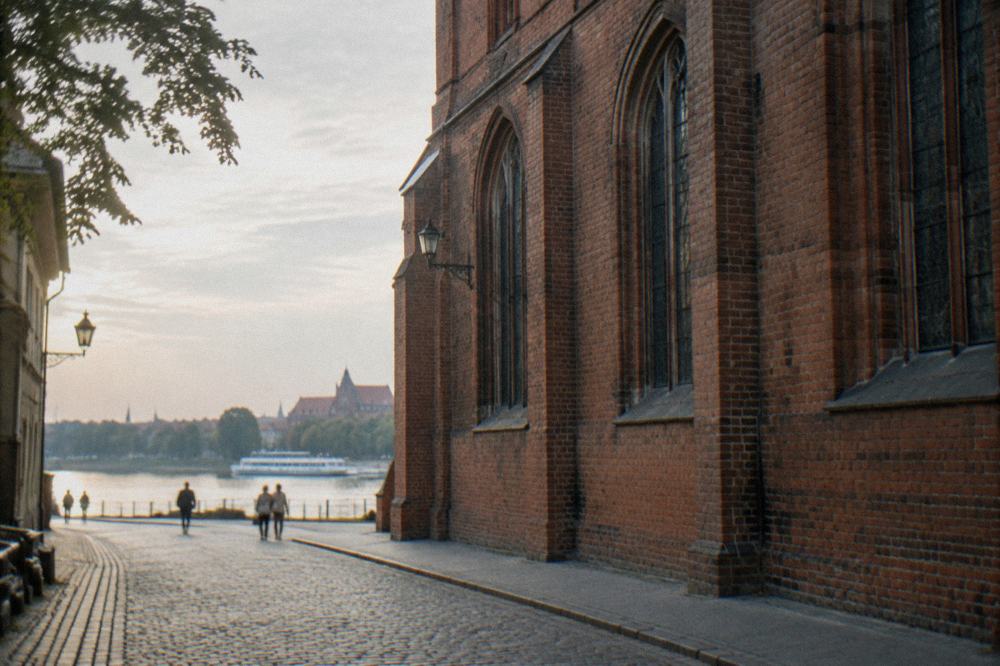
In keeping with the Franciscan rule, St Mary's Church has no tower. The mendicant orders built tall, slender churches without the towers that crown parish and cathedral churches, and St Mary's follows that rule. Its Gothic body rises beside the Planetarium at the north-west corner of the Old Town, on ul. Franciszkanska 15/17.
The practical consequence for a visitor is orientation. Without a tower, the church does not announce itself from a distance the way the Cathedral of Saints John does on the left bank. You find it by the street: walk to the north-west corner of the Old Town, and the Planetarium's dome is the landmark, with the church beside it. The Copernicus House and the Copernicus monument stand elsewhere in the Old Town, so this corner is its own small cluster of sights.
What Is The Planetarium Next Door, And What Does It Cost?
The building beside the church is the Centrum Popularyzacji Kosmosu Planetarium Toruń, a dome-show planetarium with two interactive halls, Baza MARS#17 and Geodium, at ul. Franciszkanska 15/17. An adult dome show ticket costs 25 zl, reduced 20 zl, a foreign-language version costs 30 zl, reduced 25 zl, and Baza MARS#17 or Geodium costs 12 zl, reduced 10 zl.
The two institutions share one address, which makes this corner an easy pairing: a Gothic church on one side, a dome-show planetarium on the other. The planetarium's own price list gives the figures above, and the interactive halls are priced separately from the dome shows, so a family planning both should read the price list for the combination it wants.
| Planetarium Ticket | Adult | Reduced |
|---|---|---|
| Dome show | 25 zl | 20 zl |
| Foreign-language version | 30 zl | 25 zl |
| Baza MARS#17 or Geodium | 12 zl | 10 zl |
More on the dome and the halls is on the Planetarium page.
How Does St Mary's Church Fit Into A Day In Toruń?
St Mary's Church sits in the north-west corner of the Old Town, beside the Planetarium, so it fits naturally at the start or end of a walking loop through the medieval core. The church, the Planetarium, the city walls and the main square all stand within the Old Town, and the itinerary pages cover the order that suits a one-day visit or a longer stay.
For a first visit, the one day in Toruń itinerary is the page to plan from. A guided walk adds the history the buildings do not explain on their own: the Budget Guided Sightseeing Walk covers the Old Town's sights in a group format, and the Budget Private Medieval Walk does the same privately. For a self-paced alternative, the self-guided walking tour page lays out the route.
The private version suits anyone who wants the same ground at their own pace.
To take the Old Town at your own pace, book a private walking tour here.
And the full guided option, for the church and the streets around it together, is the Medieval Town Walking Tour.
Common Questions About St Mary's Church In Toruń
What is St Mary's Church in Toruń?
St Mary's Church (Kosciol Wniebowziecia NMP) is a Gothic former Franciscan church in the north-west corner of the Old Town, beside the Planetarium. It was built in the second half of the 14th century by the Franciscans, who had come to Toruń in 1239.
Why does St Mary's Church have no tower?
In keeping with the Franciscan rule, the church has no tower. The Gothic body rises beside the Planetarium without the tower that crowns parish and cathedral churches.
Whose mausoleum stands in St Mary's Church?
The Baroque mausoleum of the Swedish princess Anna Vasa stands in the chancel. Her funeral was held in the church in 1636, after Catholic clergy opposed her burial in Krakow because she was a Protestant.
How old are the wall paintings in St Mary's Church?
The wall paintings of saints were made in the 1380s. The richly carved, tall wooden stalls in the chancel are a few decades younger, from the first half of the 15th century.
Was St Mary's Church always Catholic?
No. From 1557 to 1724 the church was in Protestant hands. It was returned to Catholics in 1724, after the religious riots known as the Tumult of Toruń, and Bernardine friars then held the church and friary for nearly 100 years.
For more on the city's medieval core, start with the Old Town area page, or read the wider medieval story on the Toruń Travel Guide homepage.