Bydgoskie Przedmieście
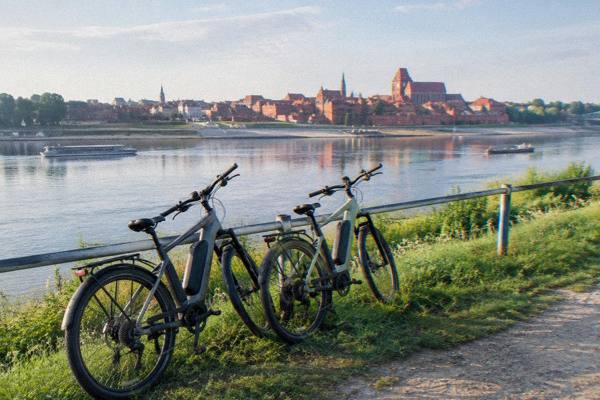
West of the Old Town, Bydgoskie Przedmieście holds over 500 registered historic buildings, a medieval fishing quarter on the Vistula and a district park laid out in 1817. Here is what the area offers and how to plan a visit.
Short answer
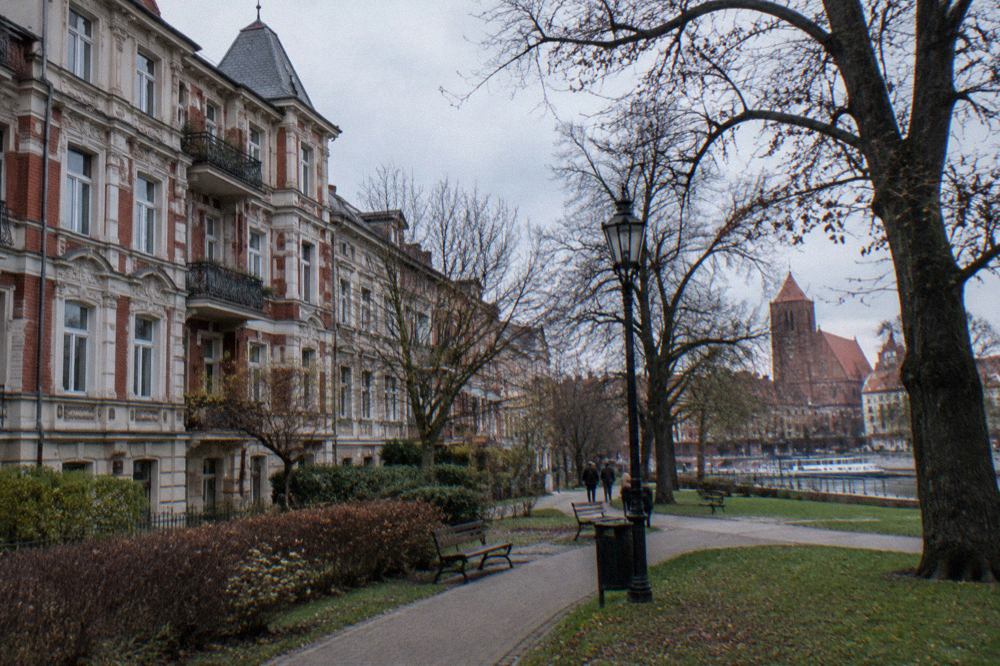
Bydgoskie Przedmieście is the district west of Toruń's Old Town, developed from the 1880s as a prestigious middle-class area of grand tenements, with the Zoo and Botanical Garden on ul. Bydgoska, the Rybaki quarter by the Vistula and the Winter Port built in 1879. Trams along ul. Bydgoska reach the stop Ogrod Zoobotaniczny beside the main zoo entrance.
Bydgoskie Przedmieście stretches west of Toruń's Old Town and keeps more registered historic buildings than any other district covered on Toruń Travel Guide after the medieval core itself: over 500 in total, 48 of them timber-framed. The historic layout of the district, together with the Rybaki quarter, was entered in the register of monuments in 2011.
What Is Bydgoskie Przedmieście In Toruń?
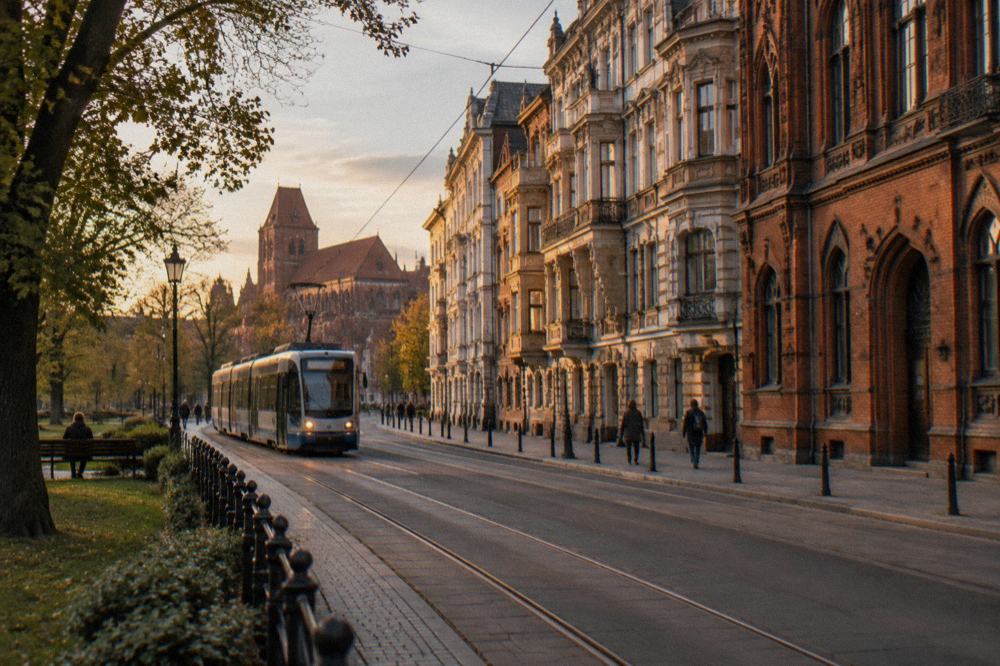
Bydgoskie Przedmieście is the part of Toruń stretching west of the Old Town. From the 1880s it was a prestigious district lived in mainly by the well-off middle class, and in that period a series of grand tenement houses and public buildings went up, with a park and a botanical garden laid out. Its main draw today is the old architecture: tenement houses of the late 19th and early 20th century with rich detail and decorative motifs.
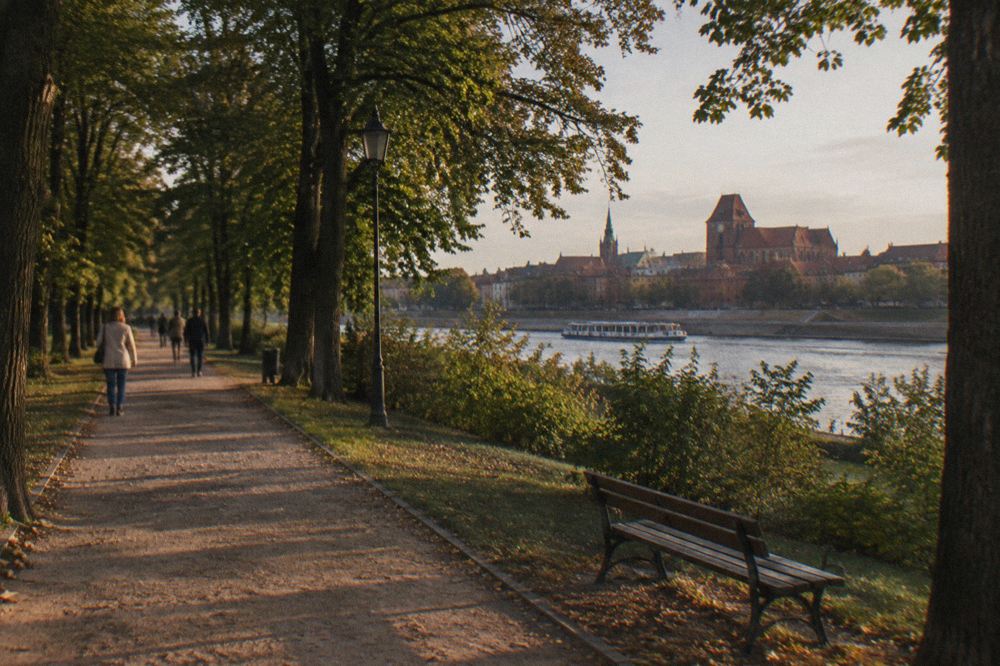
Bydgoska street was laid out in 1817 and work on the municipal park began the same year, so the district's frame predates the great building wave by several decades. The buildings that followed fill that frame with richly detailed facades, and many houses were built half-timbered, using the technique known as Prussian wall (mur pruski).
The district sits between the Old Town and the Vistula's westward bend, with the Rybaki quarter at its riverside edge. Visitors planning a first visit to the city usually begin in the Old Town of Toruń, then walk west when the medieval core is done.
| Fact | Detail |
|---|---|
| Position | West of the Old Town, Toruń |
| Main street | Bydgoska street, laid out in 1817 |
| Municipal park | Work began in 1817 |
| Prestige era | From the 1880s, well-off middle class |
| Register of monuments | Historic layout with Rybaki entered in 2011 |
| Historic buildings | Over 500, of which 48 timber-framed |
Why Are So Many Houses In Bydgoskie Przedmieście Half-Timbered?
Solid masonry building was banned in the first fortress zone, within 600 metres of the outer edge of the ramparts, so builders in that belt used half-timbering, the technique known as Prussian wall (mur pruski). That is why 48 timber-framed buildings survive among the district's 500-plus registered historic structures. The timber-framed houses and the grand tenements stand together in one streetscape.
The rule shaped the district permanently: inside the 600-metre belt the visible building technique is timber frame with brick infill, while the grander tenements with rich detail and decorative motifs rise outside it. Walking west from the ramparts, the change in building technique is visible street by street.
The same belt explains the generous green space. A park and a botanical garden were laid out in the district during its building period, and land that fortress rules held open became the municipal park whose works began in 1817.
For a guided walk that covers the medieval core before a westward detour, the Medieval Town Walking Tour is the option to look at.
What To See In Bydgoskie Przedmieście And Rybaki?
The district's sights are the Zoo and Botanical Garden at ul. Bydgoska 7 with origins in 1797, the tram depot of 1891, the former Wrangel Barracks between Falata, Zeromskiego and Sienkiewicza streets, the Rybaki quarter with its surviving 19th century wooden houses, and the Winter Port built in 1879 on the Vistula. Each sits within walking distance of Bydgoska street.
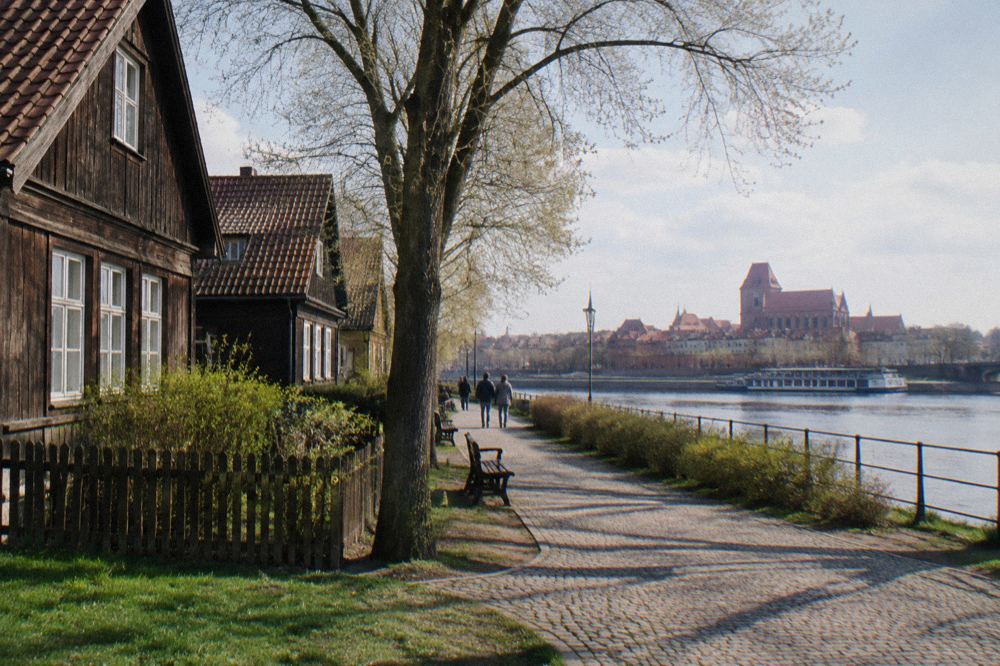
The Rybaki quarter takes its name from a medieval fishing settlement. Wooden houses of the 19th century survive there, and the one at no. 9/11 was once the inn "Ogrod w Dolinie", known for its crayfish soup. Today the quarter faces the river that gave it a living, along the same bank reached from the Riverside Philadelphia Boulevard.
The Winter Port was built in 1879 and once served as a base for river monitors, inland artillery vessels. Today it works as a repair yard for river craft. The Zoo and Botanical Garden stands at ul. Bydgoska 7, and its origins go back to 1797, long before the district's building boom.
| Sight | Address or location | Key fact |
|---|---|---|
| Zoo and Botanical Garden | ul. Bydgoska 7 | Origins in 1797 |
| Tram depot | Along ul. Bydgoska | Built in 1891 |
| Former Wrangel Barracks | Between Falata, Zeromskiego and Sienkiewicza streets | Former military complex |
| Rybaki wooden houses | Rybaki quarter | 19th century, no. 9/11 was the inn "Ogrod w Dolinie" |
| Winter Port | Vistula riverbank | Built in 1879, once a base for river monitors |
The boulevard and the river open a second way to see the district: from the water. The Evening Cruise, 50 Minutes and the 25-Minute Panorama Cruise both run on the Vistula beside the quarter, and the view from a boat frames Rybaki's wooden houses against the Old Town skyline beyond. Check availability
How Do You Get To Bydgoskie Przedmieście?
Trams run along ul. Bydgoska, and the stop "Ogrod Zoobotaniczny" sits beside the main zoo entrance, making the tram the direct route from the city centre into the heart of the district. On foot, the district begins immediately west of the Old Town ramparts, so no transport is needed for the tenement streets closest to the medieval core.
A walk from the New Town westward crosses the whole district in one line along and around Bydgoska street. The 600-metre fortress belt where timber framing was required begins at the ramparts, so the half-timbered houses appear within the first stretch of any walk from the Old Town.
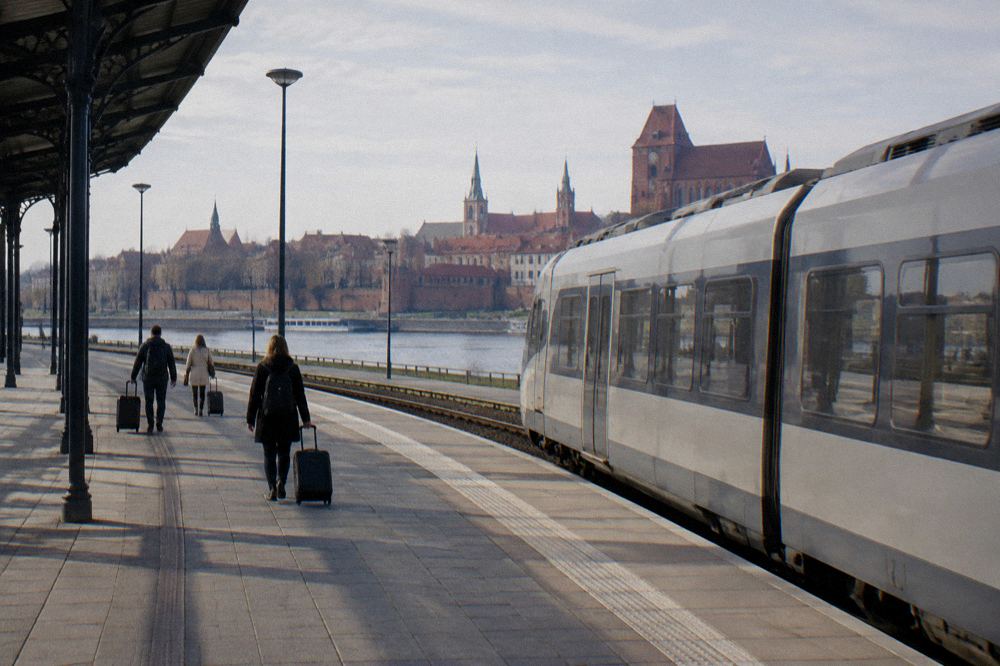
For visitors arriving from farther afield, the district is a natural first stop after the medieval core. The Copernicus House and the Old Town sights sit east of the ramparts, and Bydgoskie Przedmieście begins where they end.
How Does Bydgoskie Przedmieście Fit Into A Toruń Visit?
Bydgoskie Przedmieście works best as the second half of a day: the medieval core first, then a walk or tram ride west along ul. Bydgoska to the tenements, the park, the zoo and the Rybaki riverside. A one-day itinerary can hold both, since the district begins directly at the Old Town's edge and the tram stop "Ogrod Zoobotaniczny" serves the far end.
The district also pairs with a river trip, because Rybaki faces the same Vistula that carries the sightseeing boats. A plan that starts with the Leaning Tower of Toruń and the Teutonic Castle ruins in the Old Town can end with the river view from the west bank.
Visitors with more time can build the day around the one-day Toruń itinerary and treat the district as its western leg. The register entry of 2011 covers the historic layout as a whole, so a walk through the streets reads as a single planned ensemble rather than scattered individual monuments.
| Plan | Morning | Afternoon |
|---|---|---|
| One day, Old Town plus west | Old Town and castle ruins | Bydgoska street, park, Rybaki |
| Half day in the district | Tenement streets and tram depot | Zoo and Botanical Garden, Rybaki riverside |
| Day with a river trip | Old Town sights | 25-Minute Panorama Cruise, then Rybaki on foot |
For travellers deciding when to come, the best time to visit Toruń matters for the park, the botanical garden and the riverside walk, the parts of the district that depend on open-air weather.
Common Questions About Bydgoskie Przedmieście
What is Bydgoskie Przedmieście in Toruń?
It is the part of Toruń stretching west of the Old Town. From the 1880s it was a prestigious district lived in mainly by the well-off middle class, filled with grand tenement houses and public buildings, plus a park and a botanical garden.
Why are so many houses in Bydgoskie Przedmieście half-timbered?
Under fortress rules, solid masonry building was banned in the first fortress zone, within 600 metres of the outer edge of the ramparts, so builders used the half-timbered technique known as Prussian wall (mur pruski). Forty-eight timber-framed buildings survive in the district.
What is the Rybaki quarter?
Rybaki takes its name from a medieval fishing settlement. Wooden houses of the 19th century survive there, and the one at no. 9/11 was once the inn "Ogrod w Dolinie", known for its crayfish soup.
When was Bydgoskie Przedmieście listed as a historic district?
The historic layout of Bydgoskie Przedmiescie with Rybaki was entered in the register of monuments in 2011. The district counts over 500 historic buildings, 48 of them timber-framed.
How do you reach the Zoo and Botanical Garden in Bydgoskie Przedmieście?
Trams run along ul. Bydgoska, and the stop "Ogrod Zoobotaniczny" is beside the main zoo entrance. The Zoo and Botanical Garden stands at ul. Bydgoska 7 and traces its origins to 1797.
Whether walked from the ramparts or reached by tram to "Ogrod Zoobotaniczny", Bydgoskie Przedmieście gives Toruń a second, greener face west of the medieval core, and the Vistula boats tie its riverside edge back to the city's famous skyline.