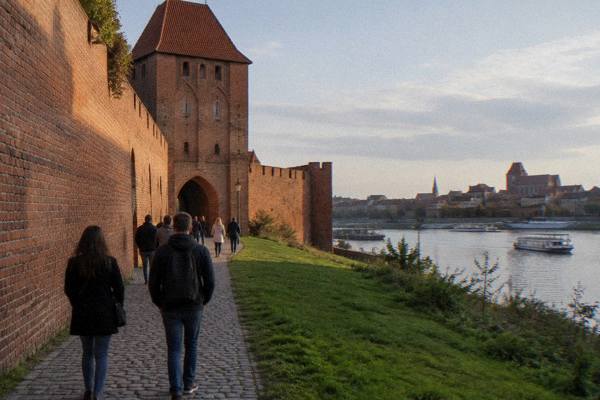
Was Toruń Destroyed In WWII?
No. Toruń's medieval Old Town stood through WWII almost untouched, though the city lived under German occupation from 7 September 1939 to 1 February 1945 and about 600 Poles were murdered at Barbarka.
Was Toruń destroyed in WWII? No. Polish Wikipedia summarises the war record in one line: apart from minor episodes, Toruń was not touched by the wartime destruction that befell so many Polish cities. Wehrmacht units entered on 7 September 1939 and the German occupation ended on 1 February 1945, but the medieval street plan, the Gothic churches and the brick townhouses of the Old Town came through those years standing. What the war did leave in Toruń was an occupation record, a prisoner-of-war camp in the fortress forts, a destroyed railway bridge and a forest memorial at Barbarka where about 600 Poles were murdered.
Was Toruń Destroyed In WWII?
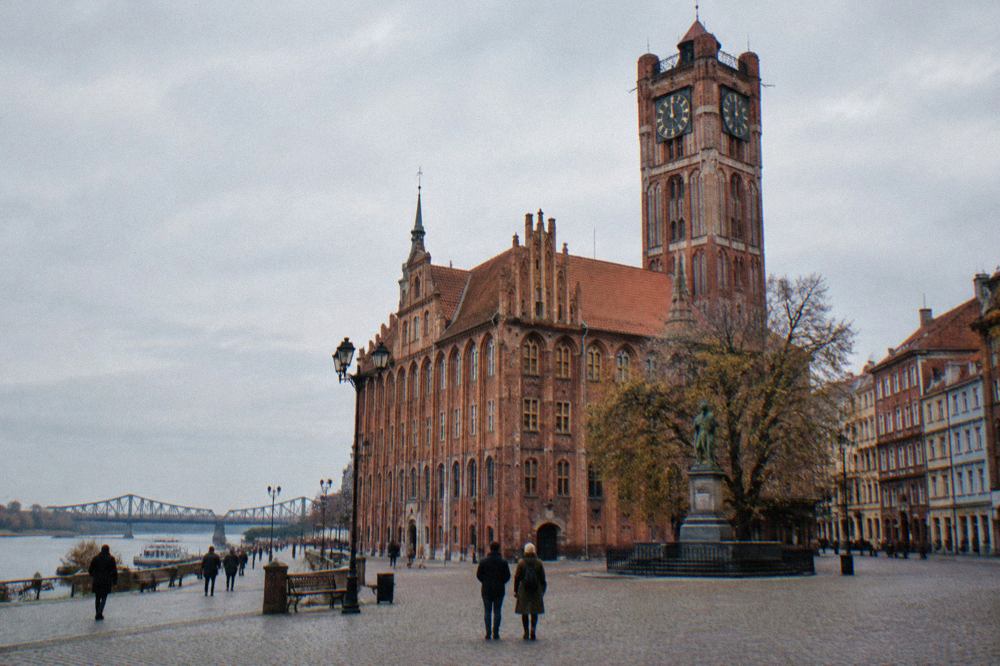
No, Toruń was not destroyed in WWII. The city lived under German occupation from 7 September 1939, when Wehrmacht units entered, until 1 February 1945, when Soviet troops arrived and a Polish administration was set up soon after, but the medieval Old Town survived those years. Polish Wikipedia records that, apart from minor episodes, Toruń was not touched by the wartime destruction that befell so many Polish cities.
The comparison matters for anyone planning a visit. A traveller standing on Rynek Staromiejski today is looking at Gothic fabric that pre-dates the war by centuries, not at a postwar reconstruction. UNESCO inscribed the site, under the official name Medieval Town of Toruń, in 1997 on criteria (ii) and (iv), covering three elements: the ruins of the Teutonic Castle, the Old Town and the New Town, ringed by defensive walls. The inscription came half a century after the fighting in the city ended, and the buildings that earned it were already there.
That is the short answer to the question, but it is not the whole story of Toruń between 1939 and 1945. The occupation years left marks on the city that had nothing to do with falling bombs and everything to do with what people did to each other, and one of those marks is a place you can still visit.
What Happened In Toruń During The German Occupation?
The German occupation of Toruń began on 7 September 1939, when Wehrmacht units entered the city, and the city itself calls that day the start of an occupation lasting more than five years. On 1 February 1945 Soviet troops entered Toruń as the German units were breaking out towards Bydgoszcz, and a Polish administration was set up soon after. By the end of 1944 about 16,000 resettled Germans had been settled in the city.
Toruń entered the war as a city that had grown fast. Its population rose from 37,000 to 79,000 residents between 1920 and 1939. Under occupation, the German authorities settled about 16,000 Germans in Torun by the end of 1944, people resettled from Eastern Europe and the Reich.
The worst violence came early. In autumn 1939 the Germans arrested Poles from Toruń and held them mainly in Fort VII, which was turned into a prison. From late October, groups were driven to the Barbarka forest and shot. The city puts the death toll at about 600. The 19th-century Toruń Fortress, built by Prussia in 1872 to 1894, played no significant role in the First World War or in any later conflict, but its forts found a wartime use as the site of Stalag XX-A, a German prisoner-of-war camp in use from 1939 to 1945 that held Polish, British, French, Australian and Soviet prisoners.
For a guided walk through the streets that stood through these years, the Medieval Town Walking Tour is the option to look at, and the cards below round up the other tours worth pairing with it.
What Was Actually Destroyed In Toruń During The War?
The railway bridge over the Vistula was destroyed in 1939 and rebuilt by the occupation authorities during the severe winter of 1939/1940. Beyond that and minor episodes, the record names no destruction of the medieval city. The executions at Barbarka between October and December 1939, in which about 600 Poles were murdered, were the gravest wartime loss Toruń suffered, and it was a human one.
The bridge story comes from a city page for a 2013 exhibition of wartime photographs by Kurt Grimm. A railway bridge is infrastructure, not heritage, and its loss and rebuilding left the Old Town untouched. The Barbarka story is harder. The victims were buried in mass graves in the forest; before the end of the war the graves were dug up on German orders and most of the bodies burned. Exhumation work followed in September and October 1945. More of these guides are collected on Toruń Travel Guide.
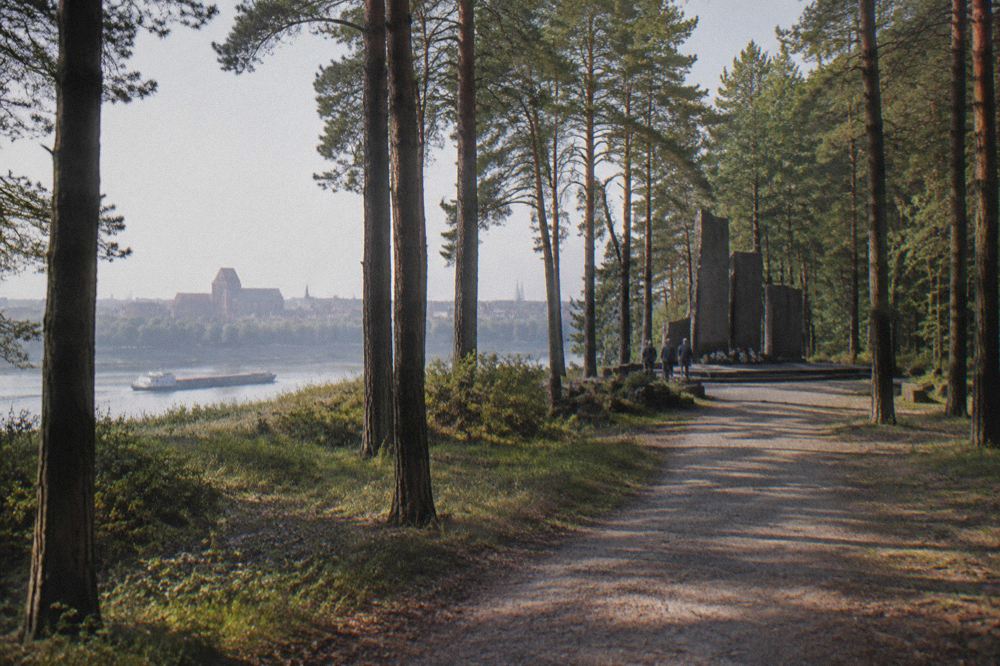
A memorial stands at Barbarka today, and an open-air Mass with a patriotic ceremony is held there every year. The 85th anniversary ceremony took place on 27 October 2024. Barbarka is a forest settlement with the Szkola Lesna education centre, a rope park and the national memorial, 9.0 km by road from Rynek Staromiejski, and MZK bus line 31 runs there all week. Entry is free. For a day built around the Old Town rather than the forest, start with one day in Toruń and work outward.
Why Does Toruń's Old Town Still Look Medieval?
Because it is medieval, and UNESCO says so in unusually direct language. The organisation describes the Medieval Town of Toruń as remarkably authentic in terms of its location and setting, forms and designs, and materials and substances, and as an original, unchanged example of medieval town planning. The property does not suffer from adverse effects of development or neglect, and it was inscribed in 1997.
Those two phrases, authenticity and integrity, are the formal tests a site must pass, and Toruń passes them on the strength of real surviving fabric. The Old Town moved to its present site in 1236, the town charter dates to 28 December 1233 under Kulm law, and the ring of defensive walls, the ruins of the Teutonic Castle and the New Town together make up the inscribed property. Walking it is the reason many people come, and the Old Town area guide maps it street by street.
| Date | Event In Toruń |
|---|---|
| 7 September 1939 | Wehrmacht units enter; the occupation of more than five years begins |
| October to December 1939 | About 600 Poles from Toruń murdered at Barbarka; arrests held mainly in Fort VII |
| Winter of 1939/1940 | Destroyed railway bridge rebuilt by the occupation authorities |
| By end of 1944 | About 16,000 resettled Germans settled in Toruń |
| 1 February 1945 | Soviet troops enter as German units break out towards Bydgoszcz |
| September and October 1945 | Exhumation work at the Barbarka mass graves |
| 27 October 2024 | 85th anniversary ceremony held at the Barbarka memorial |
What Happened To Toruń Immediately After The War?
On 2 March 1945 the capital of the Pomeranian voivodeship was moved from Toruń to Bydgoszcz, a decision taken within weeks of the occupation ending. Professors repatriated from the Stefan Batory University in Vilnius then arrived in Toruń, and the city's postwar story began with that loss of status and that academic gain.
The two facts sit side by side in the record. Losing the voivodeship capital cost the city administrative weight, which went to the neighbour it is most compared with, while the arrival of the Vilnius professors seeded the university presence that shapes Toruń today. If the comparison with Bydgoszcz interests you, both cities are close enough to see on one trip, and a day trip to Bydgoszcz covers the essentials.
The fortress that had held Stalag XX-A returned to being what it had been since 1872 to 1894: a 19th-century Prussian fortification that played no significant role in any conflict. Its forts, and the ruins of the much older castle, are now visitor sights rather than prison sites, and the Teutonic Castle ruins are part of the UNESCO inscription itself.
How Should You Visit Toruń's Wartime Sites?
Plan two stops: the Old Town, where the war's absence is the point, and Barbarka, 9.0 km by road from Rynek Staromiejski, where the memorial to about 600 murdered Poles stands in the forest. MZK bus line 31 runs to Barbarka all week and entry is free, so the memorial costs nothing but the fare and the time.
In the Old Town itself, the wartime record is something you read about rather than look at, because the buildings carry older stories. The Copernicus connection is a good example: Copernicus was born in Toruń on 19 February 1473, and the house at ul. Kopernika 15/17 is traditionally held to be his birthplace, a claim the museum presents as reputed rather than proven. If that thread pulls at you, where Copernicus was born untangles it properly.
For the occupation record, a walk with a guide covers the streets and the events in one loop. The Budget Guided Sightseeing Walk runs daily, and the Evening Cruise, 50 Minutes shows the surviving city from the water after dark, the river that carried the bridge the Germans destroyed and rebuilt.
Common Questions About Toruń In WWII
Was Toruń destroyed in WWII?
No. Apart from minor episodes, Toruń was not touched by the wartime destruction that befell so many Polish cities. The Old Town's Gothic fabric and medieval street plan survived the German occupation of 7 September 1939 to 1 February 1945 intact.
When did the German occupation of Toruń begin and end?
Wehrmacht units entered Toruń on 7 September 1939, the day the city calls the start of an occupation lasting more than five years. Soviet troops entered on 1 February 1945 as German units broke out towards Bydgoszcz, and a Polish administration was set up soon after.
What happened at Barbarka near Toruń?
In autumn 1939 the Germans arrested Poles from Toruń and held them mainly in Fort VII. From late October, groups were driven to the Barbarka forest and shot. The city puts the death toll at about 600. A memorial stands there now and a ceremony is held every year.
Can you visit the Barbarka memorial?
Yes. Barbarka lies 9.0 km by road from Rynek Staromiejski, MZK bus line 31 runs there all week, and entry to the forest and memorial is free.
Is Toruń's Old Town a reconstruction?
No. UNESCO describes the Medieval Town of Toruń as an original, unchanged example of medieval town planning, remarkably authentic in its location, forms and materials, and states that the property does not suffer from adverse effects of development or neglect.
Was there a prisoner-of-war camp at Toruń?
Yes. Stalag XX-A was a German prisoner-of-war camp set up in the forts around Toruń, in use from 1939 to 1945, holding Polish, British, French, Australian and Soviet prisoners.
The short version stands: Toruń was occupied for more than five years and emerged with its medieval core standing, and the place to weigh that record is the Old Town itself on foot, with the Barbarka memorial as the second half of the story.